Central Banks at a Crossroads :What Can We Learn from History? - Studies in Macroeconomic History
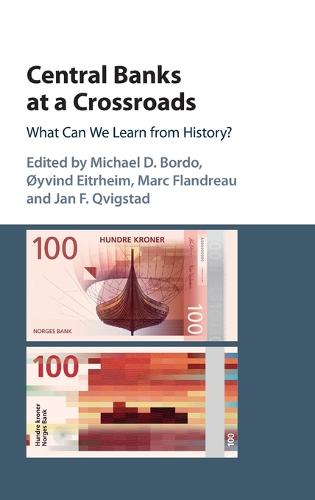
Central Banks at a Crossroads :What Can We Learn from History? - Studies in Macroeconomic History
hardback
Published:
9 June, 2016

Popular Books by Michael D. Bordo
View All Books by Michael D. Bordo

Description
More Details
| Type | Book |
|---|---|
| ISBN13 | 9781107149663 |
| ISBN10 | 1107149665 |
| Number Of Pages | 714 |
| Item Weight | 1140 g |
| Product Dimensions | 163 x 235 x 43 mm |
| Publisher / Reseller | Cambridge University Press |
| Format | hardback |
Media Reviews
'Economic policy makers - just as generals - tend to fight the last battle rather than the one at hand. Instead they should learn from history and try to find fundamental underlying principles that can guide policy. For those with an interest in monetary policy and the task of a central bank Central Banks at a Crossroads is a good start.' Lars Heikensten, former Governor of Sveriges Riksbank, Executive Director of The Nobel Foundation
'How do societies remember? How are events that occur repeatedly, but that are separated by large gaps of time like financial crises, to be dealt with if every generation wants to learn their own lessons? This important volume argues that the history of central banking and central banks in practice holds out the possibility of creating two institutional attributes crucial for effective public policy: memory and patience. Casting a wider scope than monetary and banking history, the chapters suggest new ways of thinking about the role of central banks and their interaction with economies, polities, and societies.' John Joseph Wallis, University of Maryland
'This book makes for fresh reading at an important juncture, as the economic recovery weakens, while some central banks begin to exit from unprecedented crisis-response policies. We live in unchartered territory, and it helps to gain a better historical perspective of central banking and the challenges these institutions face. This book should provide the basis for debate and the development of next-generation central bank policies.' Angel Gurría, Secretary-General of the Organisation for Economic Co-operation and Development
Author's Bio
Michael D. Bordo is Professor of Economics and Director of the Center for Monetary and Financial History at Rutgers University, New Brunswick. Øyvind Eitrheim is a Director at the Governor's office, Norges Bank, Oslo. Marc Flandreau is a Professor of International History at the Graduate Institute of International Studies and Development in Geneva. Jan F. Qvigstad is the Executive Director of Norges Bank, Oslo.