Minds, Memes, and Manipulation :Psychological, Cognitive and Information Warfare in the Digital Space
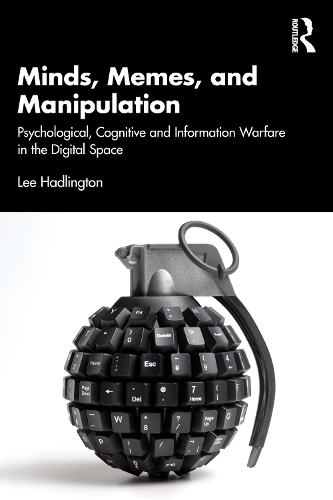
Minds, Memes, and Manipulation :Psychological, Cognitive and Information Warfare in the Digital Space
paperback
Published:
26 June, 2026

Popular Books by Lee Hadlington
View All Books by Lee Hadlington
Description
In an era where battles are fought not just with code but with culture, this book explores the evolving landscape of cyber conflict through the lens of psychology, cognition, and information warfare. It delves into the hidden war waged across digital platforms: a war for attention, belief, and behavioural control.
Drawing on research from psychology, the book examines how online spaces have become fertile ground for memetic warfare, disinformation campaigns, and cognitive manipulation. It investigates the psychological mechanisms that make individuals susceptible to digital influence, including cognitive dissonance, confirmation bias, and personality traits that shape vulnerability. From the motivations of hackers and propagandists to the architecture of viral misinformation, the strategic use of digital tools to exploit human cognition are unpacked. It also explores the role of personality psychology in understanding who is most at risk — and why — in the age of digital persuasion.
Whether you're a researcher, policymaker, professional, or simply a curious reader, this book offers a compelling and timely analysis of the new terrain of cyber conflict, where minds are the battlefield and memes are the weapons.
More Details
| Type | Book |
|---|---|
| ISBN13 | 9781041270362 |
| ISBN10 | 1041270364 |
| Number Of Pages | 160 |
| Item Weight | 1000 g |
| Publisher / Reseller | Taylor & Francis Ltd |
| Format | paperback |
Author's Bio
Lee Hadlington is an Associate Professor in Cyberpsychology at Nottingham Trent University, UK, and a member of the Cyberpsychology Research Group. His research focuses on aspects of risk and resilience in Cyberspace, with a particular emphasis on susceptibility to cybercrime, fake news and misinformation, cybersecurity, and information security. He has published extensively on the topic of human factors and cybersecurity, as well as other work focusing on the role of individuals in the proliferation of misinformation and attitudes towards AI in defence settings.