Explanatory Optimism about the Hard Problem of Consciousness
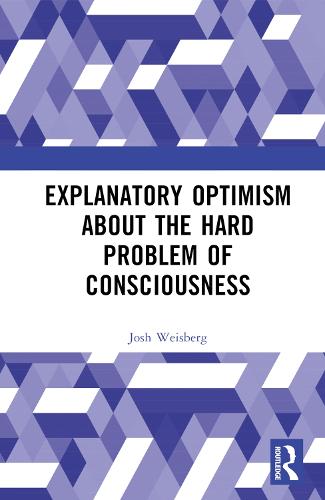
Explanatory Optimism about the Hard Problem of Consciousness
hardback
Published:
20 November, 2023

Popular Books by Josh Weisberg
View All Books by Josh Weisberg
Description
Explanatory Optimism about the Hard Problem of Consciousness argues that despite the worries of explanatory pessimists, consciousness can be fully explained in “easy” scientific terms. The widespread intuition that consciousness poses a hard problem is plausibly based on how consciousness appears to us in first-person access. The book offers a debunking argument to undercut the justificatory link between the first-person appearances and our hard problem intuitions.
The key step in the debunking argument involves the development and defense of an empirical model of first-person access: Automated Compression Theory (ACT). ACT holds that first-person access to consciousness is accomplished by automated accessing of compressed sensory information. Because of the distorting nature of this compressed access, it seems to subjects that consciousness possesses “exceptional” properties—properties leading to the hard problem—even though no such properties are present. If there are no exceptional properties to explain, then an explanation in easy terms can fully account for conscious experience. The book presents a range of empirical evidence for ACT and concludes that the burden of proof is now on the pessimists to show why we shouldn’t be optimistic about explaining consciousness.
More Details
| Type | Book |
|---|---|
| ISBN13 | 9781032533438 |
| ISBN10 | 1032533439 |
| Number Of Pages | 180 |
| Item Weight | 453 g |
| Publisher / Reseller | Taylor & Francis Ltd |
| Format | hardback |
Author's Bio
Josh Weisberg is Associate Professor of Philosophy at the University of Houston. He is the author of Consciousness (2014) and editor of Qualitative Consciousness: Themes from the Philosophy of David Rosenthal (2022) and has published a range of articles in philosophy of mind and consciousness studies.