State Formation through Emulation :The East Asian Model
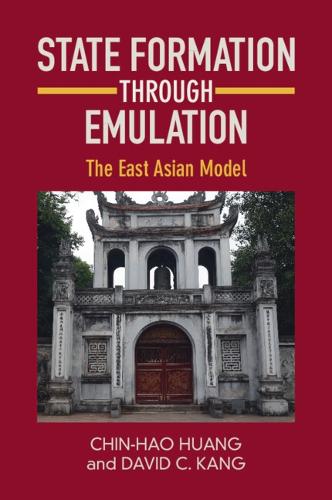
State Formation through Emulation :The East Asian Model
paperback
Published:
4 August, 2022

Popular Books by Chin-Hao Huang
View All Books by Chin-Hao Huang
Description
More Details
| Type | Book |
|---|---|
| ISBN13 | 9781009096317 |
| ISBN10 | 1009096311 |
| Number Of Pages | 252 |
| Item Weight | 380 g |
| Product Dimensions | 152 x 228 x 14 mm |
| Publisher / Reseller | Cambridge University Press |
| Format | paperback |
Media Reviews
International Relations needs to move beyond critiques of Eurocentrism to present big, positive alternative ideas. Few if any books in the field achieve this goal as well as State Formation in Historical East Asia. Huang and Kang's fresh, challenging and incredibly important thesis is that state-building in East Asia preceded that in Europe, and was the result of emulation rather than military competition. Jason Sharman, Sir Patrick Sheehy Professor of International Relations, University of Cambridge
This innovative analysis demonstrates that state building in Asia was very different from Europe: characterized by mimicry and diffusion, rather than warfare or competition. It is a major and very welcome contribution to the literature on state-building across the world. Anna Grzymala-Busse, Kevin and Michelle Douglas Professor of International Studies, Stanford University
Huang and Kang have reconstructed deep historical pathways toward state making in East Asia. They helpfully highlight shared traits that distinguish these states as a group from those formed in Europe. State Formation Through Emulation: The East Asian Model helps to reduce the persistent asymmetry of knowledge about European and East Asian state making dynamics. The book points us toward to a future moment when historically contextualized state making dynamics across different world regions can be scrutinized for the distinctive features these diverse states bring into their subsequent encounters with each other. R. Bin Wong, R. Bin Wong, Director of the UCLA Asia Institute and Distinguished Professor of History, University of California, Los Angeles
Author's Bio
Chin-Hao Huang is assistant professor of political science and head of studies for global affairs at Yale-NUS College in Singapore. His research and teaching focus on China's foreign relations, the international relations of East Asia, and international security. His books include Power, Restraint, and China's Rise (2022) and Identity in the Shadow of a Giant: How the Rise of China is Changing Taiwan (2021). David Kang is Maria Crutcher Professor of International Relations at the University of Southern California, where he is also director of the USC Korean Studies Institute. He researches East Asian security, the international relations of historical East Asia, and Korean politics.