Navajo Nation 1950 :Traditional Life in Photographs
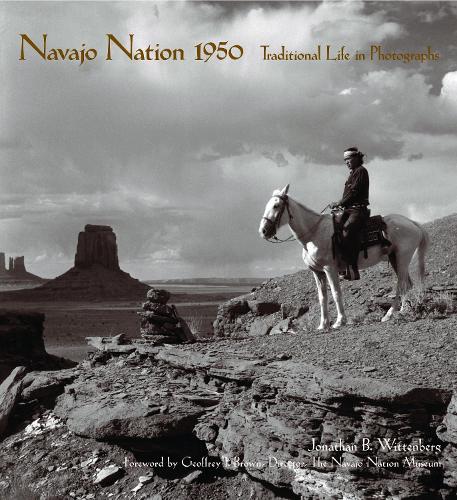
Navajo Nation 1950 :Traditional Life in Photographs
hardback
Published:
30 January, 2019

Popular Books by Jonathan Wittenberg
View All Books by Jonathan Wittenberg



Description
More Details
| Type | Book |
|---|---|
| ISBN13 | 9780977753192 |
| ISBN10 | 0977753190 |
| Number Of Pages | 128 |
| Item Weight | 1000 g |
| Publisher / Reseller | Glitterati Inc |
| Format | hardback |
Media Reviews
Between 1950-1953 Jonathan Wittenberg travelled throughout the Dinetah region of the Native American Navajo tribe, a region that encompasses the intersection of New Mexico, Arizona, Colorado and Utah. With his twin-lens reflex camera, Wittenberg captured the Navajos, and was the only non-native to be able to access them between the years of 1950-1953 - a feat he achieved by gifting the tribe with quartz crystals, abalone shells, and two bags of oranges, on his first visit. The photos he brought back are a rare insight into the Navajos, examining their culture and traditional practices. Jocks & Nerds Magazine, 2/20/15 The photographs presented in Navajo Nation 1950 celebrate the drama and splendor of the traditional Navajo people and of the dramatic desert on which they endure. -- Jonathan B. Wittenberg PMc Magazine, Spring 2015 This is a book that captures and preserves the traditional life and culture of the Navajo Indians. Between 1950 and 1953, the author traveled throughout the Arizona-New Mexico region known as the Navajo Reservation. The land is harsh and yet stunningly beautiful. The people, as seen through the lens of his camera, hold the beauty and the hardship of the land in their faces. It is unusual and very rare even today that an outsider is allowed to view many of their traditional rituals. They are a private people. -- Noella Ballenger Apogee Photo Magazine Wittenberg fell in love with the high desert, and decided to go back, taking his bulky, twin-lens reflex camera with him. The result of his travels is collected in Navajo Nation 1950: Traditional Life in Photographs (Glitterati Incorporated). Wittenberg's photographs include stark desert landscapes on the reservation, juxtaposed with regal portraits of weavers, dancers, and medicine men. -- Miss Rosen Crave Online, August 14, 2015
Author's Bio
Jonathan B. Wittenberg is a Professor Emeritus of Physiology and Biophysics at the Albert Einstein College of Medicine in New York City. He received his undergraduate degree from Harvard College and his PhD from Columbia University. His photographs from the era in which he lived with the Navajo people can be found in the permanent collection of the Navajo Nation Museum in Window Rock, Arizona and the Heard Museum, in Phoenix, Arizona. He and his wife live in Woods Hole, Massachusetts.