
0.87Kg of CO2

109 litre(s) of Water

0.0065 Tree(s)

1 book donated to global literacy projects
The Numbers Had to Tally
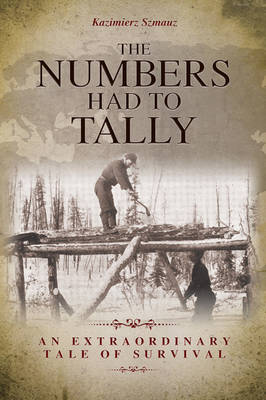
The Numbers Had to Tally
paperback
Published:
1 April, 2010


Description
More Details
| Type | Book |
|---|---|
| ISBN13 | 9780955229572 |
| ISBN10 | 095522957X |
| Number Of Pages | 218 |
| Item Weight | 1000 g |
| Publisher / Reseller | ESSEX HUNDRED PUBLICATIONS |
| Format | paperback |
Media Reviews
The Numbers had to Tally, by Kazimierz Szmauz is the harrowing account of the experiences of the author as a young man growing up in war-torn Poland. Caught uncomfortably between the occupying armies of both Nazi Germany and the Soviet Union, the author was arrested by the Red Army attempting to cross the border, and subsequently fed into the barbarous machine that was the Russian Gulag. The book describes in graphic detail the 18 months spent in the work camp system that claimed the lives of millions during the Soviet era. The style of the book is very matter of fact, detailing simply, from a first person perspective, what happened to Szmauz during this time. It is not judgemental, nor does it seek to analyse. It is gritty and harsh - often not an easy read - as one discovers the extent of the inhumanity in the system. It is a story of one man's survival in the hands of a brutal regime. It is a compelling read, which I completed in just two sittings! Comparisons may be made to the works published in the 1970s by Solzhenitsyn on the same topic. Solzhenitsyn, however, was Russian and had a political agenda in publishing his works, and indeed it was his political opinions that initially got him sent to the Gulag. Szmauz, however, had no agenda, he was simply in the wrong place at the wrong time. This is the story of a young man's day to day struggle to stay alive in the truly brutal conditions of the camps. The camps may now have gone and the Soviet Union has evaporated, but it would be naive to assume that other nations do not have their own Gulags even today. This book not only serves to preserve the memory of a brave survivor, but also to remind us that civilisation is often little more than a thin veneer. By Roy Jackson