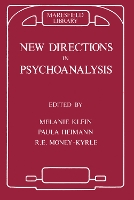
New Directions in Psychoanalysis :The Significance of Infant Conflict in the Pattern of Adult Behaviour
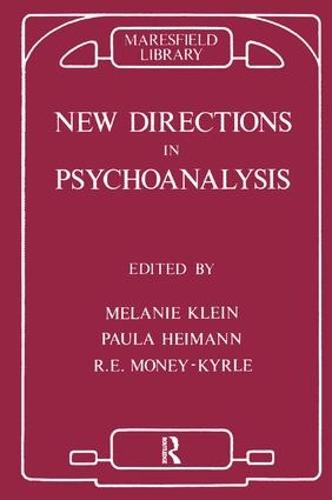
New Directions in Psychoanalysis :The Significance of Infant Conflict in the Pattern of Adult Behaviour
paperback
Published:
31 December, 1985

Popular Books by Paula Heimann
View All Books by Paula Heimann

Description
More Details
| Type | Book |
|---|---|
| ISBN13 | 9780946439133 |
| ISBN10 | 0946439133 |
| Number Of Pages | 548 |
| Item Weight | 1000 g |
| Publisher / Reseller | Taylor & Francis Ltd |
| Format | paperback |
Media Reviews
Melanie Klein's contribution to psycho-analysis is centered on her exploration into the early stages of the mental development of the child, which she began while a pupil of Karl Abraham. Taking as her starting point Freud's concept of free association, as used in the analysis of adults, she set herself the task of adapting this technique to the psycho-analytic treatment of children. From this was evolved her play technique whereby, though providing a situation in which a child could play freely", she was able to interpret his play - that is, describe and explain to him the feelings and phantasies that seemed to be expressed within it.By means of this technique, Melanie Klein made a most significant contribution to psycho-analysis. Not only she showed that it is possible to achieve therapeutic results more fruitful than those usually achieved with adults; but she was also able to map out in greater detail than had ever before been possible the early stages of mental development.The psycho-analytic picture as illuminated by her work emphasizes two principal stages of normal development, which Melanie Klein called "positions". The first, issuing from the infant's unintegrated and violently conflicting attitude to the vital objects of this world, is marked by a persecutory anxiety which may retard or disrupt the integration of the infant's ego. In the second stage the infant begins to apprehend that the gratifying objects he needs and loves are but other aspects of the menacing and frustrating objects he hates. This discovery arouses concern for these objects, and he experiences depression. However, in so far as he can tolerate the depressive position, it gives rise to reparative impulses and a capacity for unselfish concern and protective love. The extent to which he achieves this normal outcome determines the stability of his health or his liability to illness. In Melanie Klein's view, two of Freud's great discoveries, the super-ego and the Oedipus complex, have their roots in these early periods of development.
Author's Bio
Melanie Klein was an Austrian-born British psychoanalyst who devised novel therapeutic techniques for children that had an impact on child psychology and contemporary psychoanalysis. She was a leading innovator in theorizing object relations theory, and remains one of the most important figures in psychoanalytical theory and practice. Roger Money-Kyrle (1898-1980) was an influential psychoanalyst particularly noted for his promotion and development of the ideas of Melanie Klein. He was analysed by Ernest Jones, by Freud and later by Klein. Initially his interest in psychoanalysis was stimulated in connection with his work in philosophy, anthropology, and the social sciences generally, but following his analysis with Klein he became a practising analyst and subsequently a training analyst. His papers reflect both his interest in the contributions that psychoanalytic thought could make to understanding social problems, in particular in matters of war and politics, and also his contributions to analytic theory and praxis.