A Process-Based Approach to CBT :Understanding and Changing the Dynamics of Psychological Problems
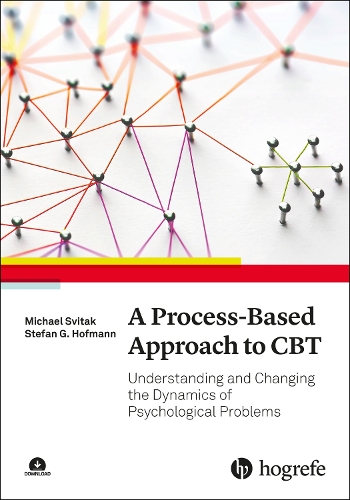
A Process-Based Approach to CBT :Understanding and Changing the Dynamics of Psychological Problems
paperback
Published:
9 January, 2024

Popular Books by Michael Svitak
View All Books by Michael Svitak
Description
More Details
| Type | Book |
|---|---|
| ISBN13 | 9780889376281 |
| ISBN10 | 088937628X |
| Number Of Pages | 220 |
| Item Weight | 1000 g |
| Publisher / Reseller | Hogrefe Publishing |
| Format | paperback |
Media Reviews
This work is an excellent introduction to the rationale, conceptualization, and treatment implications of a process-based therapy.;Robert L. Leahy, PhD, Director of the American Institute for Cognitive Therapy, New York City, NY, USA.
The authors offer a forward-thinking and scientifically grounded reimagining of CBT. The process-based approach (PBA) encourages clinicians to move away from rigid, symptom-focused treatments and instead embrace a more nuanced, dynamic understanding of psychological distress. With its emphasis on flexibility, personalization, and integration, this book provides therapists with the tools to better meet the complex needs of their clients. Although its implementation may present some challenges, particularly for less experienced practitioners, the PBA represents a promising evolution in the field of CBT that has the potential to greatly improve therapeutic outcomes.” Reviewed by Adam Duberstein, PsyD, Clawson, MI, in The Independent Practitioner, 2025, 25(1).
Author's Bio
Michael Svitak, PhD, studied psychology in Regensburg (Germany) and Reading (UK), receiving his doctorate at the University of Salzburg (Austria) in 1998. Since 2004, he has been head psychologist at the Center for Behavioral Medicine at the Schoen Clinic Bad Staffelstein and also a supervisor and trainer for process-based cognitive behavioral therapy. Stefan G. Hofmann, PhD, is professor of psychology at the Department of Psychological and Brain Sciences at Boston University and has had tenure at Boston University since 2003. Since 2021, he has been Alexander von Humboldt Professor, LOEWE Top Professor, and Head of the Translational Clinical Psychology at Philipps University Marburg. His research and work interests are mechanisms of treatment change and emotion regulation, and cultural expressions of psychopathology.