The Still Arrow :Three Attempts to Annul Time - The Italian List
The Still Arrow :Three Attempts to Annul Time - The Italian List
hardback
Published:
25 March, 2022
hardback
Published:
25 March, 2022

Standard worldwide delivery by
Mon, July 6 - Thu, July 9
Order within
0
Popular Books by Elvio Fachinelli
View All Books by Elvio Fachinelli
Description
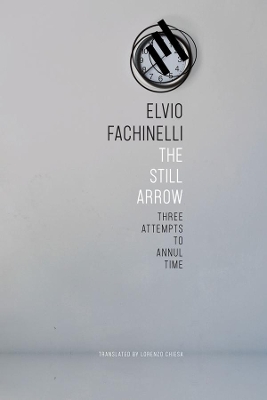
Elvio Fachinelli (1928–1989) was a leading Italian psychoanalyst whose clinical, theoretical, and activist work resonated well beyond his discipline. In The Still Arrow, Fachinelli launches an interdisciplinary investigation ranging from anthropology to politics, and from the history of religions to the critique of ideology.
Originally published in 1979, this book displays Fachinelli’s eclectic methodology. The Still Arrow goes against Freud’s attempt in Totem and Taboo to equate individual psycho-libidinal predicaments with those of whole societies. Yet, it argues that the difference between the two always remains one of degree, not of principle. The vexing problem of their relation is approached through an interrogation of time. From a psychoanalytic standpoint, individual obsessional neurosis is firmly connected to a repudiation of death. But, Fachinelli argues, comparable temporal strategies are also present at the group level, in disparate social and historical contexts, for instance, in the archaic transformation of the dead into ancestors and in what he names 'the fascist phenomenon'.
From this perspective, history is not just the sum of all possible histories but also of impossible ones. Fachinelli delineates an innovative knowledge of time which brings together apparently distant events into a characteristic series. This first English translation of a book by Fachinelli, The Still Arrow introduces a major critical European voice to the larger readership.
Originally published in 1979, this book displays Fachinelli’s eclectic methodology. The Still Arrow goes against Freud’s attempt in Totem and Taboo to equate individual psycho-libidinal predicaments with those of whole societies. Yet, it argues that the difference between the two always remains one of degree, not of principle. The vexing problem of their relation is approached through an interrogation of time. From a psychoanalytic standpoint, individual obsessional neurosis is firmly connected to a repudiation of death. But, Fachinelli argues, comparable temporal strategies are also present at the group level, in disparate social and historical contexts, for instance, in the archaic transformation of the dead into ancestors and in what he names 'the fascist phenomenon'.
From this perspective, history is not just the sum of all possible histories but also of impossible ones. Fachinelli delineates an innovative knowledge of time which brings together apparently distant events into a characteristic series. This first English translation of a book by Fachinelli, The Still Arrow introduces a major critical European voice to the larger readership.
More Details
| Type | Book |
|---|---|
| ISBN13 | 9780857428516 |
| ISBN10 | 0857428519 |
| Number Of Pages | 158 |
| Item Weight | 313 g |
| Product Dimensions | 152 x 229 x 18 mm |
| Publisher / Reseller | Seagull Books London Ltd |
| Format | hardback |
See More +
Media Reviews
"Fachinelli (1928–89) was a prominent Italian psychoanalyst, and wrote this landmark study of obsessional neurosis in Italian. First published in 1979 and here translated for the first time into English, the book was inspired by a single case in which an obsessional man was observed to attempt, through his practice of tackling daily activities, to nullify time by doing them in reverse order. . . . The book rethinks Freudianism and should interest scholars of the European history of ideas, psychoanalysis, and religion as well as practitioners who seek fresh approaches to conceptualizing the difficult cases of obsessional patients." * Choice *