Religion and the Cold War :A Global Perspective
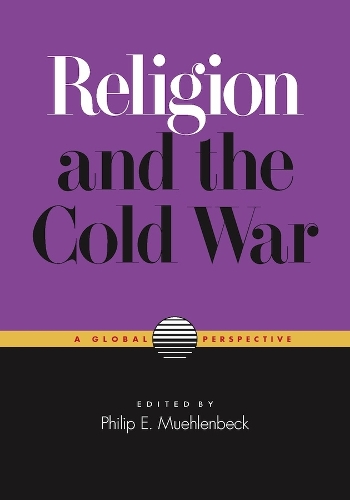
Religion and the Cold War :A Global Perspective
hardback
Published:
30 July, 2012

Popular Books by Philip E. Muehlenbeck
View All Books by Philip E. Muehlenbeck
Description
The lines of armed conflict, and the catastrophic perils they portended, were shaped with shocking clarity in the immediate aftermath of World War II. Less clear is the role religious ideology played in the conflicts that defined the Cold War era. All too often, beliefs held sacred by some became tools to motivate action or create friction. In Religion and the Cold War, Philip Muehlenbeck assembles an international team of specialists to explore how religion informed the ideological and military clashes across the globe in the second half of the twentieth century.
Students and scholars will find in this volume a level of comprehensiveness rarely achieved in Cold War studies. Each chapter reveals that the power and influence of ideas are just as important as military might in the struggles between superpowers and that few ideas, then as now, carry as much force as religious ideology. As Muehlenbeck and his contributors demonstrate, no area of the world, and no religious tenet, was safe from the manipulations of a powerful set of players focused solely on their own sphere of influence.
More Details
| Type | Book |
|---|---|
| ISBN13 | 9780826518521 |
| ISBN10 | 0826518524 |
| Number Of Pages | 288 |
| Item Weight | 1000 g |
| Publisher / Reseller | Vanderbilt University Press |
| Format | hardback |
Media Reviews
"...Religion and the Cold War is an essential contribution to religious history, history of the Cold War, and twentieth-century international history."
--H-Net Reviews
"...Religion and the Cold War is an essential contribution to religious history, history of the Cold War, and twentieth-century international history."
--H-Net Reviews
"Religion and the Cold War is an admirable collection"
--Journal of Interdisciplinary History
"Religion and the Cold War is an admirable collection"
--Journal of Interdisciplinary History
"I highly recommend this book."
--Journal of Church and State
"I highly recommend this book."
--Journal of Church and State
"Religion and the Cold War is a crucial reminder that religion shaped the international context of the Cold War for both the United States and the Soviet Union in the decades following World War II. A much-needed collection of essays, this volume demonstrates that nations who resisted the two superpowers often did so through religious organizations and religious visions of their own national communities."
--David Zietsma, Redeemer University College
"Religion and the Cold War is a crucial reminder that religion shaped the international context of the Cold War for both the United States and the Soviet Union in the decades following World War II. A much-needed collection of essays, this volume demonstrates that nations who resisted the two superpowers often did so through religious organizations and religious visions of their own national communities."
--David Zietsma, Redeemer University College
"This is an ambitious and stimulating volume that reflects two of the most important trends in the recent study of the Cold War: the role of religion in its development, and its global nature. Bible-bearing balloons launched into the German wind, the surprising relationship between the Soviet state and its four Central Asian muftiates, tensions between South Vietnam's Catholic leadership and the majority Buddhist opposition--these episodes, and many more, add an exciting and essential new dimension to the history of this vital era."
--Andrew J. Rotter, Colgate University, author of Hiroshima: The World's Bomb
"This is an ambitious and stimulating volume that reflects two of the most important trends in the recent study of the Cold War: the role of religion in its development, and its global nature. Bible-bearing balloons launched into the German wind, the surprising relationship between the Soviet state and its four Central Asian muftiates, tensions between South Vietnam's Catholic leadership and the majority Buddhist opposition--these episodes, and many more, add an exciting and essential new dimension to the history of this vital era."
--Andrew J. Rotter, Colgate University, author of Hiroshima: The World's Bomb
Author's Bio
Philip E. Muehlenbeck, a professorial lecturer in history at George Washington University, is the author of Betting on the Africans: John F. Kennedy's Courting of African Nationalist Leaders, and editor of Race, Ethnicity, and the Cold War: A Global Perspective.