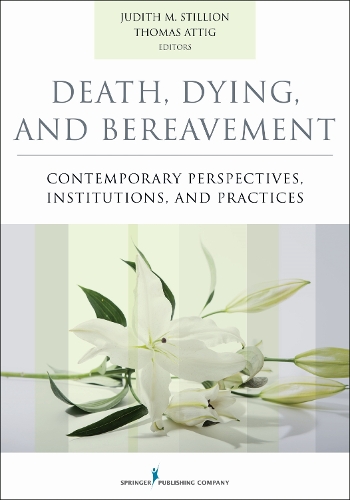
Death, Dying, and Bereavement :Contemporary Perspectives, Institutions, and Practices
4.00 ( 6 Ratings by Goodreads)
Death, Dying, and Bereavement

Death, Dying, and Bereavement :Contemporary Perspectives, Institutions, and Practices

(Author) (Author) (Author) (Author)
4.00 (6 Ratings by Goodreads)
paperback
Published: 7 November, 2014
Standard worldwide delivery by Thu, July 30 - Tue, August 4
Order within 0
Condition: NEW
$111.86
Price includes shipping
Available 20 in stock
- +
FREE Returns within 30 days

Description

Delivers the collective wisdom of foremost scholars and practitioners in the death and dying movement from its inception to the present. Written by luminaries who have shaped the field, this capstone book distills the collective wisdom of foremost scholars and practitioners who together have nearly a millennium of experience in the death and dying movement. The book bears witness to the evolution of the movement and presents the insights of its pioneers, eyewitnesses, and major contributors past and present. Its chapters address contemporary intellectual, institutional, and practice developments in thanatology: hospice and palliative care; funeral practice; death education; and caring of the dying, suicidal, bereaved, and traumatized. With a breadth and depth found in no other text on death, dying, and bereavement, the book disseminates the thinking of prominent authors William Worden, David Clark, Tony Walter, Robert Neimeyer, Charles Corr, Phyllis Silverman, Betty Davies, Therese A. Rando, Colin Murray Parkes, Kenneth Doka, Allan Kellehear, Sandra Bertman, Stephen Connor, Linda Goldman, Mary Vachon, and others. Their chapters discuss the most significant facets of early development, review important current work, and assess major challenges and hopes for the future in the areas of their expertise. A substantial chronology of important milestones in the contemporary movement introduces the book, frames the chapters to follow, and provides guidance for further, in-depth reading. The book first focuses on the interdisciplinary intellectual achievements that have formed the foundation of the field of thanatology. The section on institutional innovations encompasses contributions in hospice and palliative care of the dying and their families; funeral service; and death education. The section on practices addresses approaches to counseling and providing support for individuals, families, and communities on issues related to dying, bereavement, suicide, trauma, disaster, and caregiving. An Afterword identifies challenges and looks toward future developments that promise to sustain, further enrich, and strengthen the movement. KEY FEATURES: Distills the wisdom of pioneers in and major contributors to the contemporary death, dying, and bereavement movement Includes living witness accounts of the movement's evolution and important milestones Presents the best contemporary thinking in thanatology Describes contemporary institutional developments in hospice and palliative care, funeral practice, and death education Illuminates best practices in care of the dying, suicidal, bereaved, and traumatized
See more

More Details

Type Book
ISBN13 9780826171412
ISBN10 0826171419
Number Of Pages 428
Item Weight 1000 g
Publisher / Reseller Springer Publishing Co Inc
Format paperback
See More +

GoodReads Reviews

Author's Bio

Judith M. Stillion, PhD, CT, is professor emerita of psychology and currently serves as a consultant on a variety of issues, including end-of-life issues, meaningful aging, positive psychology applied to grieving and dying, and strategic planning and facilitation of grief groups. She served as associate and vice chancellor for academic affairs at Western Carolina University, associate vice president for academic affairs in the University of North Carolina system, and founding director of the Institute for Leadership, Ethics & Character at Kennesaw State University. Thomas Attig, PhD, spent the greater part of his career (1972–1995) as professor of philosophy (now emeritus) at Bowling Green State University, where he served as department chair for 11 years and established the first PhD in applied philosophy in the world in 1987.

Show more