From Fu Manchu to Kung Fu Panda :Images of China in American Film - Critical Interventions
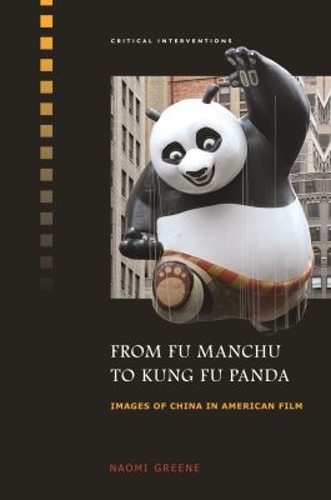
From Fu Manchu to Kung Fu Panda :Images of China in American Film - Critical Interventions
hardback
Published:
31 March, 2014
hardback
Published:
31 March, 2014

Standard worldwide delivery by
Tue, July 7 - Fri, July 10
Order within
0
Popular Books by Naomi Greene
View All Books by Naomi Greene

Description
Throughout the twentieth century, American filmmakers have embraced cinematic representations of China. Beginning with D.W. Griffith’s silent classic Broken Blossoms (1919) and ending with the computer-animated Kung Fu Panda (2008), this book explores China’s changing role in the American imagination. Taking viewers into zones that frequently resist logical expression or more orthodox historical investigation, the films suggest the welter of intense and conflicting impulses that have surrounded China.
In the United States, the exceptional emotional charge that imbues images of China has tended to swing violently from positive to negative and back again: China has been loved and— as is generally the case today—feared. Using film to trace these dramatic fluctuations, Naomi Greene relates them to the larger arc of historical and political change. She finds that American ethno-centrism is related both to an ever-present sense of American exceptionalism and to a Manichean world view that perceives other countries as friends or enemies.
Greene analyzes a series of influential films, including classics like Shanghai Express (1932), The Good Earth (1936), and Shanghai Gesture (1941); important cold war films such as The Manchurian Candidate (1962) and The Sand Pebbles (1966); and a range of contemporary films, including The Wedding Banquet (1993), Kundun (1997), Mulan (1998), and Shanghai Noon (2000). Her consideration makes clear that while many stereotypes and racist images of the past have been largely banished from the screen, the political, cultural, and social impulses they embodied are still alive and well.
In the United States, the exceptional emotional charge that imbues images of China has tended to swing violently from positive to negative and back again: China has been loved and— as is generally the case today—feared. Using film to trace these dramatic fluctuations, Naomi Greene relates them to the larger arc of historical and political change. She finds that American ethno-centrism is related both to an ever-present sense of American exceptionalism and to a Manichean world view that perceives other countries as friends or enemies.
Greene analyzes a series of influential films, including classics like Shanghai Express (1932), The Good Earth (1936), and Shanghai Gesture (1941); important cold war films such as The Manchurian Candidate (1962) and The Sand Pebbles (1966); and a range of contemporary films, including The Wedding Banquet (1993), Kundun (1997), Mulan (1998), and Shanghai Noon (2000). Her consideration makes clear that while many stereotypes and racist images of the past have been largely banished from the screen, the political, cultural, and social impulses they embodied are still alive and well.
More Details
| Type | Book |
|---|---|
| ISBN13 | 9780824838355 |
| ISBN10 | 0824838351 |
| Number Of Pages | 288 |
| Item Weight | 456 g |
| Product Dimensions | 152 x 228 x 19 mm |
| Publisher / Reseller | University of Hawai'i Press |
| Format | hardback |
See More +
Author's Bio
Naomi Greene is professor emeritus of French and film studies at the University of California, Santa Barbara, USA.