Choosing to Lead :Understanding Congressional Foreign Policy Entrepreneurs
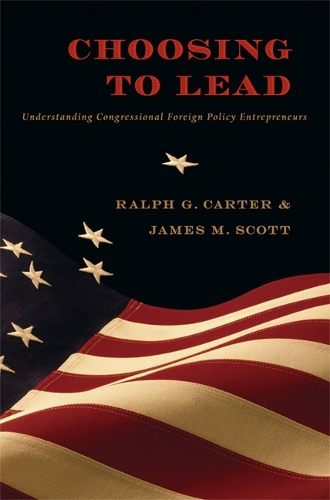
Choosing to Lead :Understanding Congressional Foreign Policy Entrepreneurs
Paperback
Published:
3 July, 2009

Popular Books by Ralph G. Carter
View All Books by Ralph G. Carter
Description
Carter and Scott combine extensive quantitative analysis, interviews with members of Congress and their staff, and case studies of key foreign policy entrepreneurs, including Frank Church, William Fulbright, Jesse Helms, Edward Kennedy, Pat McCarran, and Curt Weldon. Drawing on their empirical data, the authors identify the key variables in foreign policy entrepreneurship, including membership in the Senate or House, seniority and committee assignments, majority or minority party status, choice of foreign policy issues, and the means used to influence policy. By illuminating the roles and impact of individual members of Congress, Carter and Scott contribute to a more nuanced understanding of the broader U.S. foreign policy-making process.
More Details
| Type | Book |
|---|---|
| ISBN13 | 9780822345039 |
| ISBN10 | 082234503X |
| Number Of Pages | 312 |
| Item Weight | 458 g |
| Publisher / Reseller | Duke University Press |
| Format | Paperback |
Media Reviews
“I now see the foreign policy-making process in a different light than I did before reading Choosing to Lead. Ralph G. Carter and James M. Scott show that Congress can and regularly does play an important role in foreign policy making. In the future, foreign-policy analysts will have to consider that role rather than assume that only the Oval Office matters.”-A. Cooper Drury, author of Economic Sanctions and Presidential Decisions: Models of Political Rationality “Two scholars reveal here the fascinating stories of enterprising American lawmakers who’ve exerted extraordinary personal influence in the making of American foreign policy. Sometimes unnoted in contemporary writings and occasionally unappreciated, some were surprisingly successful and some stunningly selfless. Choosing to Lead is historically significant and interestingly written.”-Jim Wright, Former Speaker, U. S. House of Representatives
Author's Bio
Ralph G. Carter is Professor and Chair of the Department of Political Science at Texas Christian University. He is a co-author of Making American Foreign Policy and the editor of Contemporary Cases in U.S. Foreign Policy: From Terrorism to Trade.
James M. Scott is Professor and Head of the Department of Political Science at Oklahoma State University. He is the author of Deciding to Intervene: The Reagan Doctrine and American Foreign Policy, also published by Duke University Press; co-author of The Politics of United States Foreign Policy and American Foreign Policy: Pattern and Process; and editor of After the End: Making U.S. Foreign Policy in the Post–Cold War World, also published by Duke University Press.