The Politics of Protection :The Limits of Humanitarian Action
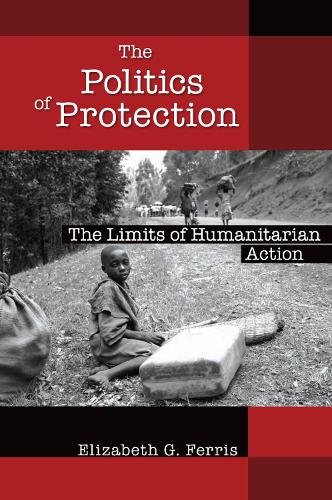
The Politics of Protection :The Limits of Humanitarian Action
paperback
Published:
30 March, 2011

Popular Books by Elizabeth G. Ferris
View All Books by Elizabeth G. Ferris

Description
For the past decade, humanitarian actors have increasingly sought not only to assist people affected by conflicts and natural disasters, but also to protect them. At the same time, protection of civilians has become central to UN peacekeeping operations, and the UN General Assembly has endorsed the principle that the international community has the ""responsibility to protect"" people when their governments cannot or will not do so. Elizabeth Ferris explores the evolution of the international community's understandings of protection, with a particular emphasis on the humanitarian community.
""Protection"" is a noble word, with positive connotations, but what does it actually mean in practice? Does providing assistance to vulnerable people protect them, for example? Does monitoring the number of rapes protect women? Does increased engagement in protection activities by humanitarian agencies jeopardize the cornerstone humanitarian principles of neutrality and impartiality?
In The Politics of Protection, Ferris examines inconsistent ways in which protection is defined and applied. For example, why do certain groups receive international protection while other equally needy groups do not? Her case studies, ranging from Iraq to Katrina, illustrate the challengesand limitationsof protecting vulnerable populations from the ravages of war and natural disasters. Ferris argues that the protection paradigms currently in use are inadequate to meet the challenges of the future, such as climate change, protracted displacement, and the changing nature of warfare.
More Details
| Type | Book |
|---|---|
| ISBN13 | 9780815721376 |
| ISBN10 | 0815721374 |
| Number Of Pages | 382 |
| Item Weight | 535 g |
| Product Dimensions | 151 x 229 x 20 mm |
| Publisher / Reseller | Bloomsbury Publishing Plc |
| Format | paperback |
Media Reviews
" The Politics of Protection is a brilliant book, full of insights on one of the most
complex tasks facing humanitarian organizations: how to protect civilians who find
themselves caught in the midst of violence. Through her personal field experience,
and thanks to a meticulous review of existing literature, Elizabeth Ferris captures
the essence of, and the dilemmas surrounding, the notion of protection in situations
of crisis and conflict. She details the efforts of humanitarian organizations to
confront both new and old challenges, while simultaneously striving to enhance
the protection of civilians affected by conflict and violence." —Pierre Gentile, Head of Unit, Protection of Civilian Population, International Committee of the Red Cross
"Protection, the author says, is the essence of the humanitarian enterprise. Weaving
masterfully into a compelling narrative the germane aspects of three major bodies
of international law, copious and disparate initiatives of the United Nations, and
the challenges confronting the humanitarians who would do protection today, she
has done us all a profound service." —António Guterres, UN High Commissioner for Refugees
"USAID welcomes this book as an excellent overview of humanitarian actors'
engagement in protection, as well as the challenges and limits of our work. USAID
is committed to promoting the protection of people affected by disasters and
conflicts, and this book serves as a reminder of why this work is important, why it
is difficult, and why we must continually strive to do it better." —Nancy Lindborg, USAID Assistant Administrator for Democracy, Conflict, and Humanitarian Assistance
Author's Bio
Elizabeth G. Ferris is a senior fellow in Foreign Policy at the Brookings Institution, where she is codirector of the Brookings Project on Internal Displacement. Prior to joining Brookings she spent twenty years in the field of humanitarian assistance, most recently with the World Council of Churches in Geneva.