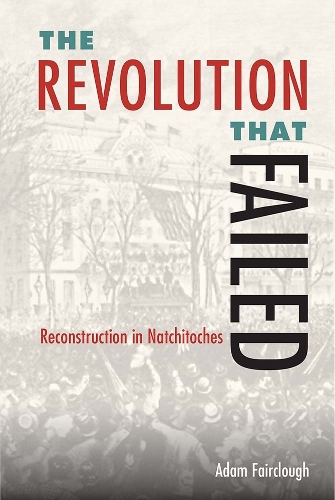
The Revolution That Failed :Reconstruction in Natchitoches
The Revolution That Failed :Reconstruction in Natchitoches
hardback
Published:
27 February, 2018

Popular Books by Adam Fairclough
View All Books by Adam Fairclough


Description
Fairclough takes readers to Natchitoches, Louisiana, a majority-black parish deep in the cotton South. Home to a vibrant Republican Party led by former slaves, ex-Confederates, and free people of color, the parish was a bastion of Republican power and the ideal place for Reconstruction to have worked. Yet although it didn’t experience the extremes of violence that afflicted the surrounding region, Natchitoches fell prey to Democratic intimidation. Its Republican leaders were eventually driven out of the parish.
Reconstruction failed, Fairclough argues, because the federal government failed to enforce the rights it had created. Congress had given the Republicans of the South and the Freedmen’s Bureau an impossible task – to create a new democratic order based on racial equality in an area tortured by deep-rooted racial conflict. Moving expertly between a profound local study and wider developments in Washington, The Revolution That Failed offers a sobering perspective on how Reconstruction affected African American citizens and what its long-term repercussions were for the nation.
More Details
| Type | Book |
|---|---|
| ISBN13 | 9780813056623 |
| ISBN10 | 0813056624 |
| Number Of Pages | 336 |
| Item Weight | 769 g |
| Product Dimensions | 155 x 233 x 26 mm |
| Publisher / Reseller | University Press of Florida |
| Format | hardback |
Media Reviews
In this provocative work of political history, Fairclough (A Class of Their Own) unequivocally declares that post-Civil War Reconstruction didn't achieve its goal: Even during Reconstruction, Democracy, in any meaningful sense of that word, ended. The first chapter lays out the argument, with Fairclough taking fellow historians Eric Foner and James McPherson to task for any optimism about the way Reconstruction ended and challenging the idea of American exceptionalism. Fairclough centers his argument on the mostly black parish of Natchitoches, La., which serves as a case study for local Republican politics and government during Reconstruction. Beginning in 1868, increasing violence by whites and fractures within the Republican Party posed significant threats to the success of Reconstruction in Natchitoches. Though congressional Republicans assumed voting rights and citizenship would secure African-Americans liberty and equality after slavery's end, they underestimated the tenacity of whites in reviving the prewar racial hierarchy. Fairclough keeps the big picture visible by weaving in the national Reconstruction politics of reabsorbing the former Confederacy into the Union. Particularly illuminating is his discussion of the Lost Cause view of the South and its role in shaping the racialized postwar meaning of loyalty, as former Confederates saw no contradiction between taking an oath of allegiance to the United States and commemorating the 'Lost Cause' of the Confederacy. Fairclough's book is a chilling reminder of how some Americans willingly perverted the democracy they claimed to treasure so they could uphold white supremacy. --Publishers Weekly