The Invention of Rivers :Alexander's Eye and Ganga's Descent - Penn Studies in Landscape Architecture
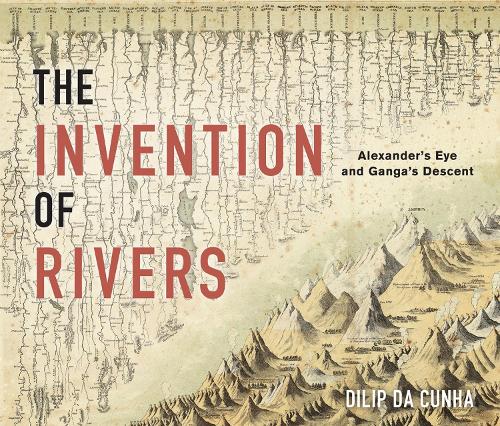
The Invention of Rivers :Alexander's Eye and Ganga's Descent - Penn Studies in Landscape Architecture
hardback
Published:
30 November, 2018

Description
Dilip da Cunha integrates history, art, cultural studies, hydrology, and geography to tell the story of how rivers have been culturally constructed as lines granted a special role in defining human habitation and everyday practice. What we take to be natural features of the earth's surface, according to da Cunha, are products of human design and a particular way of seeing that has roots stretching as far back as ancient Greek cartography. Although Alexander the Great never saw the Ganges, he conceived of it as a flowing body of water, with sources, destinations, and banks that marked the separation of land from water. This Alexandrine view of the river, da Cunha argues, has been pursued and adopted across time and around the world. With ever more sophisticated mappings of its form and characteristics, the river's essential features are refined and standardized: its source identified by a point; its course depicted as a stroke; and its propensity to flood imagined as the erasure of the boundary between water and land.
While da Cunha's vision of rivers is a global one, he takes an especially close look at the Ganges, as he traces the ways in which it has been pictured, mapped, surveyed, explored, and measured across the millennia. He argues that the articulation of the river Ganges has placed it at odds with Ganga, a "rain terrain" that does not conform to the line of separation, containment, and calibration that are the formalities of a river landscape. By calling rivers into question, da Cunha depicts an ecosystem that is neither land nor water but one of ubiquitous wetness in which rain is held in soil, aquifers, glaciers, snowfields, building materials, agricultural fields, air, and even plants and animals.
Printed in full color and featuring more than 150 illustrations, The Invention of Rivers proposes rain, or "the rainscape," as an alternative starting point for imagining, understanding, and designing human habitation.
More Details
| Type | Book |
|---|---|
| ISBN13 | 9780812249996 |
| ISBN10 | 0812249992 |
| Number Of Pages | 352 |
| Item Weight | 1000 g |
| Publisher / Reseller | University of Pennsylvania Press |
| Format | hardback |
Media Reviews
"The river city book genre is experiencing a boom. Da Cunha's book, however, is more primordial. It is hat rare combination of imagination, originality, and historic and theoretical rigour. It is the culmination of intensely methodical, patient, and attentive work of design research; often conjured, but seldom delivered to its full promise, as it is wonderfully here. The Invention of Rivers is an essential historical contribution to our future. It dares us to move toward an aspirational postcolonial moment of 'after rivers,' when they are returned, epistemologically and methodologically, to wetness. Where the Ganga's Descent transforms from the locks of Shiva's hair in river into the 'infinite strands of each individual hair' in the form of rain. In the midst of global existential climate flux, I cannot think of a more compelling, urgent challenge." (Planning Perspectives) "The Invention of Rivers is a radical and timely book that will stimulate considerable debate on matters of the greatest contemporary urgency." (Arjun Appadurai, New York University) "A highly original argument and extraordinary piece of scholarship that comes at a time when rain is behaving unpredictably and challenging humanity's attempt to contain it within banks. It offers an alternative way of thinking about our relationship with the hydrological cycle and of living with wetness." (Lindsay Bremner, University of Westminster)
GoodReads Reviews
Author's Bio
Dilip da Cunha is an architect and planner working out of Philadelphia and Bangalore and a John Simon Guggenheim Memorial Foundation Fellow. He teaches at Harvard University and Columbia University and is author with Anuradha Mathur of Mississippi Floods: Designing a Shifting Landscape; Soak: Mumbai in an Estuary; and Design in the Terrain of Water.