Cherokee Cavaliers :Forty Years of Cherokee History As Told in the Correspondence of the Ridge-Watie-Boudinot Family - The Civilization of the American Indian Series
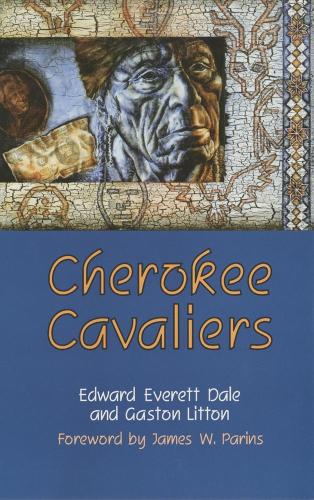
Cherokee Cavaliers :Forty Years of Cherokee History As Told in the Correspondence of the Ridge-Watie-Boudinot Family - The Civilization of the American Indian Series
paperback
Published:
15 March, 1995

Popular Books by Edward Everett Dale
View All Books by Edward Everett Dale
Description
The Cherokees, by the first decade of the nineteenth century, had made great progress in civilization. They had a constitutional form of government under which they were to live for three-quarters of a century in a tiny independent republic within the confines of the United States. Not a few were well educated. They had their own written language as evolved by Sequoyah and many had large plantations, cultivated by numerous slaves, and lived in beautiful homes as Southern planters, in the full tradition of the Southern cavalier.
From the time of President Jefferson, however, they had been under urgent pressure to leave their traditional homes in the deep south and seek new ones in the great unoccupied lands of the Louisiana Purchase. In 1835 the minority group, headed by the Ridge-Watie-Boudinot family, signed at New Echota, Georgia, a treaty which provided that the entire tribe should remove to lands in Indian Territory already occupied by the Cherokees West. This group was henceforth known as the ""Treaty Party.""
The treaty and the enforced removal three years later divided the Cherokee into two hostile factions and paved the way for thirty years of political turmoil and bloody strife within the Nation. In these letters, which center around the figure of the last Confederate General to surrender his sword - brigadier General Stand Watie - is told the story of the removal, the establishment of a new nation in the West, the divided loyalties of the tribe during the Civil War, and the tragic difficulties of the reconstruction. The picture is not alone that of life within the Nation. E. C. Boudinot, the Cherokee delegate to the Confederate congress, writes of war-torn Richmond during the Civil War. John Rollin Ridge, the poet and journalist, and several others who followed the Gold Rush to California tell of the mining camps during the days of forty-nine. General Albert Pike's official correspondence with General Watie is revealed.
As only personal letters can reveal, here in intimacy are the lives and thoughts, the loves and hates, the philosophies and ambitions of these proud cavaliers of Cherokee blood. This book will be a revelation to those who have thought of this branch of Indian race as barbarous or semi-civilized.
More Details
| Type | Book |
|---|---|
| ISBN13 | 9780806127217 |
| ISBN10 | 080612721X |
| Number Of Pages | 352 |
| Item Weight | 408 g |
| Product Dimensions | 140 x 229 x 21 mm |
| Publisher / Reseller | University of Oklahoma Press |
| Format | paperback |
Author's Bio
Edward Everett Dale has written nine books in the fields of western history, among the best known of which are The Range Cattle Industry, A History of Oklahoma, and Frontier Trails. His interest in the American Indian is of long standing. Aside from his study of Indian history, particularly that of the Five Civilized Tribes, he spent a year in field work among the tribes of the United States as a member of the Indian Survey Staff of the Brookings Institution. Mr. Dale is a graduate of the University of Oklahoma, and his A.M. and Ph.D. degrees are from Harvard, where he studied under Frederick Jackson Turner. He is now professor and head of the Department of History in the University of Oklahoma.
Gaston Litton was educated at the University of Southern California and at the Library School of the University of Oklahoma. He has also done graduate work in history in the letters institution. He is at present a member of the staff of the National Archives in Washington, D.C., attached to the Archives of the Office of Indian Affairs.
James W. Parins (1939-2013) was a Professor of English and Associate Director of the Sequoyah National Research Center at the University of Arkansas, Little Rock. Among numerous articles and books about American Indians, he is the coeditor of the Encyclopedia of Indian Removal and author of Elias Cornelius Boudinot: A Life on the Cherokee Border.