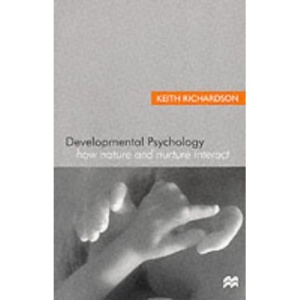
Developmental Psychology :How Nature and Nurture Interact

Developmental Psychology :How Nature and Nurture Interact
hardback
Published:
1 December, 1999

Popular Books by Keith Richardson
View All Books by Keith Richardson







Description
This clear and authoritative text provides a trenchant critique of dichotomous thinking and goes on to describe and exemplify an alternative view of development, showing the power of ecological and dynamic systems perspectives. Thematic chapters identify the classic assumptions of the nature-nurture debate and present the reader with new ways of thinking about these issues. The book begins with material that may be familiar to students, then leads them into areas of thought which may be less familiar but which are important and significant aspects of current research and debate in the field. The author shows how an alternative, ecological systems perspective can be used to form more coherent critiques of major theorists like Skinner, Piaget, Vygotsky, and Gibson.
More Details
| Type | Book |
|---|---|
| ISBN13 | 9780805836240 |
| ISBN10 | 0805836241 |
| Number Of Pages | 266 |
| Item Weight | 650 g |
| Publisher / Reseller | Taylor & Francis Inc |
| Format | hardback |
Media Reviews
"Keith Richardson has an obvious gift for conveying difficult ideas in a reader-friendly fashion....This is a very important and timely contribution to theory-building in developmental psychology at both undergraduate and graduate level."
—Brian Hopkins
Lancaster University
"Authoritative in his approach, the author has a strong grasp of a wide range of theories and research, and I found his treatment of them to be clear, coherent and consistent. It is a text which...will be accessible to second and third year students, and immensely helpful to them for its presentation of a perspective which is not always easily grasped at this level, but which, in one way or another, informs much recent work in developmental psychology."
—Gerard Duveen
University of Cambridge