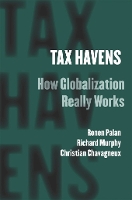
Tax Havens :How Globalization Really Works - Cornell Studies in Money
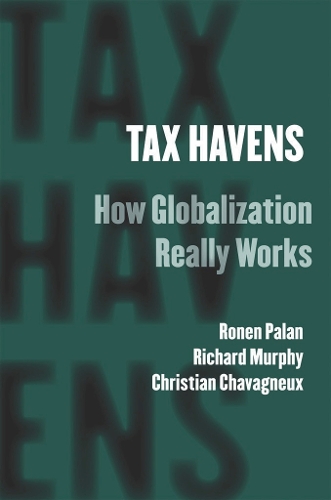
Tax Havens :How Globalization Really Works - Cornell Studies in Money
paperback
Published:
15 January, 2010

Popular Books by Ronen Palan
View All Books by Ronen Palan
Description
If you are looking to understand how tax havens and offshore financial centers work, how they are governed (or not!), and what kind of economic and political impacts they have, then this book is for you! This recent text by well-recognized experts in the field is a most welcome addition to the literatures.... It fills an important void, since there was not until now a general but nevertheless detailed reference text on tax havens... it should be mandatory for courses in IPE, international finance, and international business.— Patrick Leblond ― Political Science Quarterly
From the Cayman Islands and the Isle of Man to the Principality of Liechtenstein and the state of Delaware, tax havens offer lower tax rates, less stringent regulations and enforcement, and promises of strict secrecy to individuals and corporations alike. In recent years government regulators, hoping to remedy economic crisis by diverting capital from hidden channels back into taxable view, have undertaken sustained and serious efforts to force tax havens into compliance.
In Tax Havens, Ronen Palan, Richard Murphy, and Christian Chavagneux provide an up-to-date evaluation of the role and function of tax havens in the global financial system-their history, inner workings, impact, extent, and enforcement. They make clear that while, individually, tax havens may appear insignificant, together they have a major impact on the global economy. Holding up to $13 trillion of personal wealth-the equivalent of the annual U.S. Gross National Product-and serving as the legal home of two million corporate entities and half of all international lending banks, tax havens also skew the distribution of globalization's costs and benefits to the detriment of developing economies.
The first comprehensive account of these entities, this book challenges much of the conventional wisdom about tax havens. The authors reveal that, rather than operating at the margins of the world economy, tax havens are integral to it. More than simple conduits for tax avoidance and evasion, tax havens actually belong to the broad world of finance, to the business of managing the monetary resources of individuals, organizations, and countries. They have become among the most powerful instruments of globalization, one of the principal causes of global financial instability, and one of the large political issues of our times.
More Details
| Type | Book |
|---|---|
| ISBN13 | 9780801476129 |
| ISBN10 | 0801476127 |
| Number Of Pages | 280 |
| Item Weight | 454 g |
| Product Dimensions | 152 x 229 x 19 mm |
| Publisher / Reseller | Cornell University Press |
| Format | paperback |
Media Reviews
If you are looking to understand how tax havens and offshore financial centers work, how they are governed (or not!), and what kind of economic and political impacts they have, then this book is for you! This recent text by well-recognized experts in the field is a most welcome addition to the literatures.... It fills an important void, since there was not until now a general but nevertheless detailed reference text on tax havens... it should be mandatory for courses in IPE, international finance, and international business.
- Patrick Leblond (Political Science Quarterly)GoodReads Reviews
Author's Bio
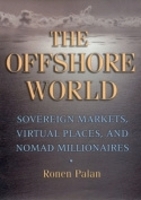
Ronen Palan is Professor of International Political Economy at the University of Birmingham. He is the author of The Offshore World: Sovereign Markets, Virtual Places, and Nomad Millionaires, also from Cornell. Richard Murphy is CEO of Tax Research, LLP, based in the UK. He is a frequent adviser to the media, NGOs, and politicians, and writes a blog at taxresearch.org.uk. Christian Chavagneux, based in Paris, is deputy editor in chief of Alternatives Economiques and editor of L'Economie politique.