People of the Body :Jews and Judaism from an Embodied Perspective - SUNY series, The Body in Culture, History, and Religion
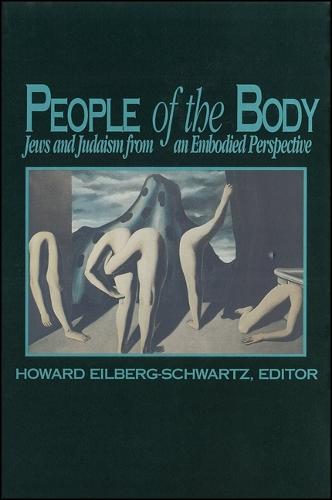
People of the Body :Jews and Judaism from an Embodied Perspective - SUNY series, The Body in Culture, History, and Religion
paperback
Published:
22 September, 1992

Popular Books by Howard Eilberg-Schwartz
View All Books by Howard Eilberg-Schwartz
Description
By shifting attention from the image of Jews as a textual community to the ways Jews understand and manage their bodies - for example, to their concerns with reproduction and sexuality, menstruation and childbirth- this volume contributes to a revisioning of what Jews and Judaism are and have been. The project of re-membering the Jewish body has both historical and constructive motivations. As a constructive project, this book describes, renews, and participates in the complex and ongoing modern discussion about the nature of Jewish bodies and the place of bodies in Judaism.
More Details
| Type | Book |
|---|---|
| ISBN13 | 9780791411704 |
| ISBN10 | 0791411702 |
| Number Of Pages | 402 |
| Item Weight | 553 g |
| Publisher / Reseller | State University of New York Press |
| Format | paperback |
Media Reviews
"The greatest strength of the book is the issue it poses: the notion that Jews are not simply a people of the book but also a people of the body. This is a dimension of Jewish experience that has been sorely neglected and that the book puts on the agenda of Jewish studies through its consideration of a number of dimensions of the embodiedness of Jewish life." — Judith Plaskow, Manhattan College
"Eilberg-Schwartz has identified an overlooked area of inquiry and has gathered together a collection of essays that in the aggregate suggests the riches awaiting further inquiry. This is the kind of book which will be cited frequently as a turning point in the development of a crucial research agenda." — Martin S. Jaffee, University of Washington
Author's Bio
Howard Eilberg-Schwartz is Assistant Professor of Religious Studies at Stanford University. He is the author of The Savage in Judaism: An Anthology of Israelite Religion and Ancient Judaism (winner of a 1990 American Academy Award for Academic Excellence) as well as The Human Will in Judaism.