The Plural Self :Multiplicity in Everyday Life
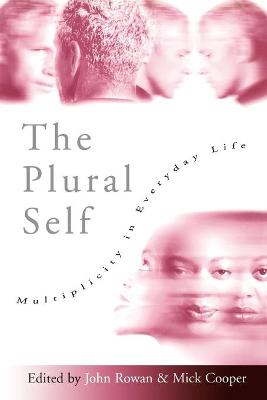
The Plural Self :Multiplicity in Everyday Life
paperback
Published:
22 December, 1998

Popular Books by John Rowan
View All Books by John Rowan
Description
`I thoroughly recommend this book. I found it challenging, provocative, exciting and full of delights. (It makes such a change to be told that ideal personality characteristics would include a Monty Pythonesque sense of humour and a tolerance of mind-altering drugs!) While reading it I often felt nourished and refreshed′ - The Journal of Critical Psychology, Counselling and Psychotherapy
With the emergence of postmodern thinking, the notion of a unified, singular `self′ appears increasingly problematic. Yet for many, postmodernism′s proclamation of `the death of the subject′ is equally problematic. As a response to this dilemma, there has been a rise of interest in pluralistic models of the `self′ in which the person is conceptualized as a multiplicity of subpersonalities, as a plurality of existential possibilities or as a `being′ which is inextricably in-dialogue-with-others.
Bringing together many disciplines, and with contributions from foremost writers on self-pluralism, The Plural Self overviews and critiques this emerging field. Drawing together theory, research and practice, the book expands on both the psychological and philosophical theories underlying and associated with self-pluralism, and presents empirical evidence in support of the self-pluralistic perspective, exploring its application within a clinical and therapeutic setting.
More Details
| Type | Book |
|---|---|
| ISBN13 | 9780761960768 |
| ISBN10 | 0761960767 |
| Number Of Pages | 288 |
| Item Weight | 430 g |
| Publisher / Reseller | SAGE Publications Inc |
| Format | paperback |
Media Reviews
`I thoroughly recommend this book. I found it challenging, provocative, exciting and full of delights. (It makes such a change to be told that ideal personality characteristics would include a Monty Pythonesque sense of humour and a tolerance of mood-altering drugs!) While reading it I often felt nourished and refreshed.... So I advise you to give the many selves you are a treat, and read this book′ - The Journal of Critical Psychology, Counselling and Psychotherapy
`[This book′s] fundamental thesis is a rather challenging one - the idea that the unified, singular "self", which we all take for granted we possess, does not exist... fascinating and important.... I will certainly revisit the book... when you′re ready for a challenge, this book is certainly worth dipping into′ - Counselling News
`A useful contribution to a field that is as important as it is impenetrable, the nature of lived experience′ - Counselling
`The perspectives articulated in this book are important, the chapters are well written, and many of the ideas are intriguing. It is a useful book that should appeal to students and researchers in personality-social psychology, and therapists who are interested in relevant therapeutic techniques and their theoretical and empirical background.′ - Personality and Individual Differences
`I thoroughly recommend this book. I found it challenging, provocative, exciting and full of delights. (It makes such a change to be told that ideal personality characteristics would include a Monty Pythonesque sense of humour and a tolerance of mind-altering drugs!) While reading it I often felt nourished and refreshed′ - The Journal of Critical Psychology, Counselling and Psychotherapy
GoodReads Reviews
Author's Bio
Mick Cooper is Professor of Counselling Psychology at the University of Roehampton, where he is Director of the Centre for Research in Social and Psychological Transformation (CREST). Mick is a chartered psychologist, a UKCP registered psychotherapist, and a Fellow of the BACP. Mick is author and editor of a range of texts on person-centred, existential and relational approaches to therapy; including Working at Relational Depth in Counselling and Psychotherapy (2005, SAGE, with Dave Mearns), Pluralistic Counselling and Psychotherapy (2011, SAGE, with John McLeod) and Existential Therapies (2nd edn, 2017, SAGE). Mick has led a series of research studies exploring the processes and outcomes of humanistic counselling with young people. Mick is the father of four children and lives in Brighton on the south coast of England.