Confidence Intervals - Quantitative Applications in the Social Sciences
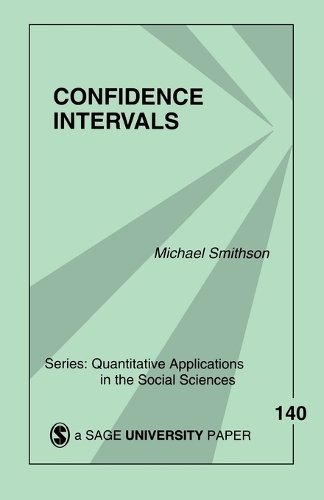
Confidence Intervals - Quantitative Applications in the Social Sciences
paperback
Published:
14 January, 2003

Popular Books by Michael Smithson
View All Books by Michael Smithson
Description
More Details
| Type | Book |
|---|---|
| ISBN13 | 9780761924999 |
| ISBN10 | 076192499X |
| Number Of Pages | 104 |
| Item Weight | 140 g |
| Publisher / Reseller | SAGE Publications Inc |
| Format | paperback |
Author's Bio
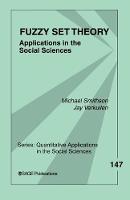
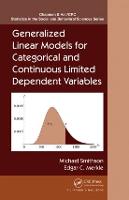
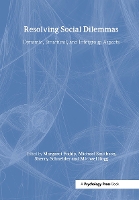
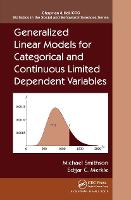
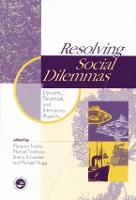
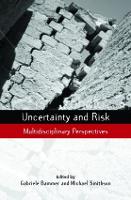
Michael Smithson is a Professor in the Research School of Psychology at The Australian National University in Canberra, and received his PhD from the University of Oregon. He is the author of Confidence Intervals (2003), Statistics with Confidence (2000), Ignorance and Uncertainty (1989), and Fuzzy Set Analysis for the Behavioral and Social Sciences (1987), co-author of Fuzzy Set Theory: Applications in the Social Sciences (2006) and Generalized Linear Models for Categorical and Limited Dependent Variables (2014), and co-editor of Uncertainty and Risk: Multidisciplinary Perspectives (2008) and Resolving Social Dilemmas: Dynamic, Structural, and Intergroup Aspects (1999). His other publications include more than 170 refereed journal articles and book chapters. His primary research interests are in judgment and decision making under ignorance and uncertainty, statistical methods for the social sciences, and applications of fuzzy set theory to the social sciences.