Gilbert Simondon's Psychic and Collective Individuation :A Critical Introduction and Guide - Critical Introductions and Guides
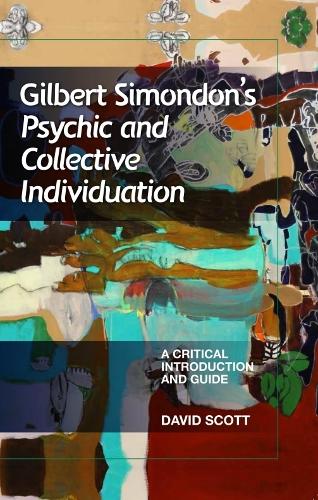
Gilbert Simondon's Psychic and Collective Individuation :A Critical Introduction and Guide - Critical Introductions and Guides
paperback
Published:
28 July, 2014
paperback
Published:
28 July, 2014

Standard worldwide delivery by
Mon, August 3 - Thu, August 6
Order within
0
Condition:
NEW
$32.16
RRP
$35.18
You save $3.02 (9%)
Available
1
in stock
FREE Returns within 30 days
Popular Books by David Scott
View All Books by David Scott








Description
One of the most innovative and brilliant philosophers of his generation, but largely neglected until he was brought to public attention by Gilles Deleuze, Gilbert Simondon presents a challenge to nearly every category and method of traditional philosophy. 'Psychic and Collective Individuation' is undoubtedly his most important work and its influence, clearly felt in Stiegler and DeLanda, has continued to grow. David Scott provides the first full introduction to this work, which will inspire as well as instruct philosophers working in Continental thought, philosophy of science, social theory and political philosophy. He introduces Simondon’s challenging text by clarifying its complex terminology and structure through a chapter-by-chapter commentary. By placing Simondon and the book in their historical context, Scott invites a dialogue with thinkers including Bergson, Deleuze, Heidegger, Sartre, Merleau-Ponty and Negri, and explains Simondon's relevance to current discussions about biopolitics and post-Nietzschean ethics.
More Details
| Type | Book |
|---|---|
| ISBN13 | 9780748654499 |
| ISBN10 | 0748654496 |
| Number Of Pages | 256 |
| Item Weight | 343 g |
| Publisher / Reseller | Edinburgh University Press |
| Format | paperback |
See More +
Author's Bio
David Scott is Associate Professor of Philosophy at Coppin State University, Baltimore. He has translated work by Simondon, Gaston Bachelard and Gilles Deleuze and has numerous articles published in journals including Angelaki, The European Legacy, Continental Philosophy Review and Chiasmi.