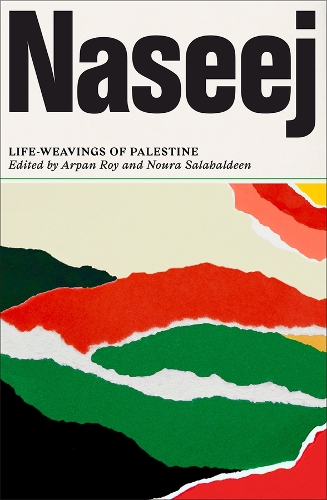
Naseej :Life-Weavings of Palestine
Naseej :Life-Weavings of Palestine
paperback
Published:
20 March, 2025

Popular Books by Arpan Roy
View All Books by Arpan Roy
Description
Naseej, meaning 'tapestry' in Arabic, is a book about diverse forms of life, communities, histories and continuities in Palestine. It compiles essays, short stories, poetry, interviews, and visual art to tell an aspect of the Palestinian story that has not been told: the severing of Palestinians from vast and ancient regional histories.
Palestine has always been a precious patchwork of languages, ethnicities, cultures, religions and practices, weaved into the fabric of an Arab and Islamic civilization that was itself a culmination of centuries of interchange and experimentation.
Arriving at a moment of utter devastation - one of the most difficult in Palestinian history - this vibrant collection celebrates the diversity of life in Palestine. From the trajectories of Romani groups to the formations of religious communities like Ahmadiyya Muslims in Haifa, to the political experience of Black Palestinians and much more, Naseej asks what kind of threads remain of this tapestry after some 150 years of modernity and colonialism.
More Details
| Type | Book |
|---|---|
| ISBN13 | 9780745350844 |
| ISBN10 | 0745350844 |
| Number Of Pages | 208 |
| Item Weight | 1000 g |
| Product Dimensions | 156 x 234 x 15 mm |
| Publisher / Reseller | Pluto Press |
| Format | paperback |
Media Reviews
'In its vivid close-ups of the diverse and dynamic communities for whom Palestine was home, Naseej offers both a heart-breaking account of what colonists have cost the world, and a hopeful template for the future. This is the book that is Palestine'
-- Ahdaf Soueif, novelist'A remarkable book of creative personal essays, poems, and scholarly investigations that illuminate the wondrous tapestry that was Palestine before the Zionists imposed their vision of exclusionary ethnonationalism and racialised rule. Unrecognisable today, except in subtle vestiges of interwoven lives and shared solidarities, this book reveals how a land could be called home by diverse people and communities of tangled origins, living side by side as neighbours and kin. As Palestinians.'
-- Lila Abu-Lughod, co-editor of Nakba: Palestine, 1948, and the Claims of MemoryAuthor's Bio
Arpan Roy is an anthropologist researching Palestine and the region. He is the author of Relative Strangers: Romani Kinship and Palestinian Difference and has held various teaching positions and fellowships in the United States, Europe, and the Middle East. Noura Salahaldeen is an anthropologist from Jerusalem, currently based in Europe. Her research focuses on the experiences of the African Community of Jerusalem under settler colonial rule in Palestine, and in the Palestinian diaspora in Jordan.