What Is Good and Why :The Ethics of Well-Being
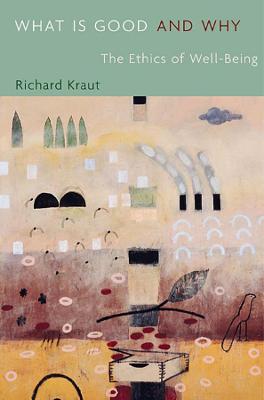
What Is Good and Why :The Ethics of Well-Being
paperback
Published:
14 June, 2009

Popular Books by Richard Kraut
View All Books by Richard Kraut
Description
What is good? How can we know, and how important is it? In this book Richard Kraut, one of our most respected analytical philosophers, reorients these questions around the notion of what causes human beings to flourish--that is, what is good for us. Observing that we can sensibly talk about what is good for plants and animals no less than what is good for people, Kraut advocates a general principle that applies to the entire world of living things: what is good for complex organisms consists in the maturation and exercise of their natural powers.
Drawing on the insights of ancient Greek philosophy, Kraut develops this thought into a good-centered moral philosophy, an "ethics of well-being" that requires all of our efforts to do some good. Even what is good of a kind--good poems no less than good people--must be good for someone. Pleasure plays a key role in this idea of flourishing life, but Kraut opposes the current philosophical orthodoxy of well-being, which views a person's welfare as a construct of rational desires or plans, actual or ideal.
The practical upshot of Kraut's theory is that many common human pursuits--for riches, fame, domination--are in themselves worthless, while some of the familiar virtues--justice, honesty, and autonomy--are good for every human being.
More Details
| Type | Book |
|---|---|
| ISBN13 | 9780674032378 |
| ISBN10 | 0674032373 |
| Number Of Pages | 304 |
| Item Weight | 1000 g |
| Publisher / Reseller | Harvard University Press |
| Format | paperback |
Media Reviews
Kraut's account fills a wide gap in the literature. What is Good and Why is a superb work, one that should have long-lasting influence. -- Samuel Freeman, University of Pennsylvania
What is Good and Why is filled not just with clearly expressed and compelling philosophical arguments, but with a lot of sound practical wisdom. It is enjoyable, enlightening, and also quite revolutionary. It deserves--and will benefit--a very wide readership. -- C. D. C. Reeve, author of Love's Confusions
Continuing in the tradition of Socrates and Plato, Kraut seeks to examine the nature of 'goodness' and proposes that 'we should ask what we commit ourselves to when we call something good for someone.'...According to Kraut, goodness is not a mind-constructed value, nor is it related to moral concepts such as right and wrong. Instead, it is based on existent world values. These values all contain similar characteristics that add to our cognitive, social, and physical well-being. Through coherent writing and familiar examples, Kraut does a wonderful job of showing that what is good does not require abstract analysis but can instead be found by combining common sense and rationality. -- Scott Duimstra * Library Journal *
Have Rawls and Nozick met their match? The titans of late-twentieth-century social philosophy do indeed find an acute critic--and possible successor--in Kraut. For in this groundbreaking inquiry into the nature of goodness, Kraut exposes the inadequacy of all previous ethical thinking, including Rawls' and Nozick's. Kraut is particularly thorough in his demolition of the cognitive theory that requires each individual to construct his or her own definition of the good. Because good must mean good for, Kraut argues, human good finally entails whatever fosters human flourishing, a flourishing that almost everyone can recognize and agree on...Religious-minded readers may protest that Kraut metaphysically impoverishes human goodness when he explicitly rejects immortality. But many other readers will praise him for enriching contemporary dialogue about fundamental ethical questions. An essential acquisition in social philosophy. -- Bryce Christensen * Booklist (starred review) *
The view [Kraut] develops, while having affinities with other recent work, is nevertheless substantially original and worked out in impressive detail. -- Guy Kahane * Times Higher Education Supplement *
Offers an original, persuasive, and substantial defense of an Aristotelian approach to ethics for today. His central claim is that all good practical arguments in ethics rest on claims about what is good or bad for someone. Like utilitarianism, Kraut places good at the heart of morality—but without what he regards as its misplaced emphasis on desire satisfaction, quantification, or maximization. Like Kantianism, Kraut recognizes the importance of considerations of duty and justice—but without what he regards as its failure to ground them in harm and benefit to others. Kraut situates his approach within contemporary discussions of ethical theory, considering, for example, John Rawis, Thomas Nagel, T. M. Scanlon, James Griffin, and Joseph Raz, as well as older theorists such as Jeremy Bentham, J. S. Mill, Henry Sidgwick, G. E. Moore, and W. D. Ross. This approach gives his work depth and relevance, though he discusses few in detail. In summary, this volume offers a robust defense of a non-Kantian, nonutilitarian approach to ethics. -- H. Oberdiek * Choice *
Author's Bio
Richard Kraut is Charles and Emma Morrison Professor in the Humanities at Northwestern University.