
1.47Kg of CO2

184 litre(s) of Water

0.011 Tree(s)

1 book donated to global literacy projects
Learning XML: Guide to Creating Self-Describing Data
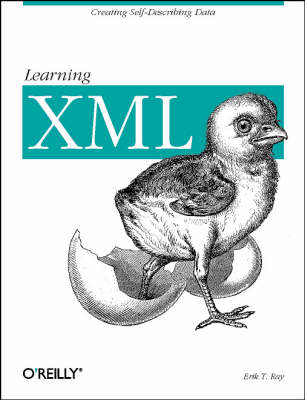
Learning XML: Guide to Creating Self-Describing Data
paperback
Published:
11 January, 2001


Popular Books by Eric J. Ray
View All Books by Eric J. Ray
Description
More Details
| Type | Book |
|---|---|
| ISBN13 | 9780596000462 |
| ISBN10 | 0596000464 |
| Number Of Pages | 368 |
| Item Weight | 566 g |
| Product Dimensions | 175 x 20 x 229 mm |
| Publisher / Reseller | O'Reilly Media |
| Format | paperback |
| Edition | 1 |
Media Reviews
'Learning XML does what it sets out to do: provides an introduction to SML concepts and XML document authoring and the related standards and, as such, represents an ideal starting point for anyone using XML.' IT Training, August 2001 'O'Reilly books have a good record. Well-know for their 'in a Nutshell series and their zoological cover illustrations, I've always found them highly satisfactory. There cannot be many works that be referred to familiarly as, for instance, The Camel Book. Well now we have The Newly-Hatched Chick book. From the title of this one I had somehow (wrongly) expected an XML primer covering only basics, but this is a thorough treatment of the subject. The book's general layout conforms to what we have become familiar with in O'Reilly'. The index is excellent and there are appendices giving a glossary and lists of standards, tools, books and resources and where to find them. Learning XML, very readable as well as being a good reference, is strongly recommended.' - Sandy McCourt, uk-bug developer's magazine, July/August 2001 'As you would expect from this publisher, the text is pleasantly presented in a way that makes it comfortable to read. I settled down to read it on a three-hour coach journey to visit my aging parents (the relevance of this is that, like reading in the bath, I had few resources other than my eyes with which to understand what the author was writing about.) What I particularly appreciate is the way the author uses practical examples (oh, and read some of the text in these, it can be hilarious) and then uses an endnote style commentary to highlight the important elements. I find this much better than the style of perverting the commenting facility of a language. For example, in chapter 5, Document Models: A Higher Level of Control he use the 'Barebones DocBook' DTD as his final consolidating example of DTDs. The approach in this book works well with the way I like to read to learn. I would definitely recommend this book to programmers wanting to get to grips with XML.' - Francis Glassborow, Cvu, April 2001
Author's Bio
Erik Ray is a software wrangler for the computer book publisher O'Reilly and Associates, helping to move production to an XML-based workflow. He lives with his wife Jeannine and 5 birds in Saugus, Massachusetts. When not writing, he can be found practicing kendo, watching Japanese animation, playing go, or stalking antiquarian book fairs to indulge his fetish for 19th-century children's books and machine bolt catalogs.