The Cambridge Companion to Boethius - Cambridge Companions to Philosophy
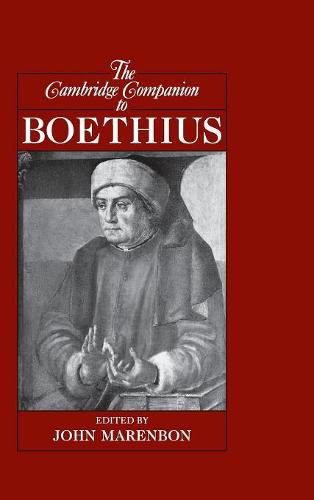
The Cambridge Companion to Boethius - Cambridge Companions to Philosophy
hardback
Published:
14 May, 2009
hardback
Published:
14 May, 2009

Standard worldwide delivery by
Tue, August 11 - Fri, August 14
Order within
0
Popular Books by John Marenbon
View All Books by John Marenbon

Description
Boethius (c.480–c.525/6), though a Christian, worked in the tradition of the Neoplatonic schools, with their strong interest in Aristotelian logic and Platonic metaphysics. He is best known for his Consolation of Philosophy, which he wrote in prison awaiting execution. His works also include a long series of logical translations, commentaries and monographs and some short but densely-argued theological treatises, all of which were enormously influential on medieval thought. But Boethius was more than a writer who passed on important ancient ideas to the Middle Ages. The essays here by leading specialists, which cover all the main aspects of his writing and its influence, show that he was a distinctive thinker, whose arguments repay careful analysis and who used his literary talents in conjunction with his philosophical abilities to present a complex view of the world.
More Details
| Type | Book |
|---|---|
| ISBN13 | 9780521872669 |
| ISBN10 | 0521872669 |
| Number Of Pages | 372 |
| Item Weight | 710 g |
| Product Dimensions | 156 x 235 x 22 mm |
| Publisher / Reseller | Cambridge University Press |
| Format | hardback |
See More +
Media Reviews
"...the quality of all of the chapters in this magnificent volume is very high, a fact that will hopefully encourage historians of philosophy to broaden their horizons, as it were, and to 'read Boethius whole' (2), as Marenbon puts it." Philosophy in Review, Peter Eardley, University of Guelph
Author's Bio
John Marenbon is a Senior Research Fellow at Trinity College, Cambridge. His publications include The Philosophy of Peter Abelard (1997, 1999) and Boethius (2003).