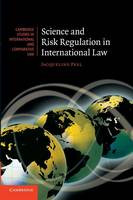
Science and Risk Regulation in International Law - Cambridge Studies in International and Comparative Law
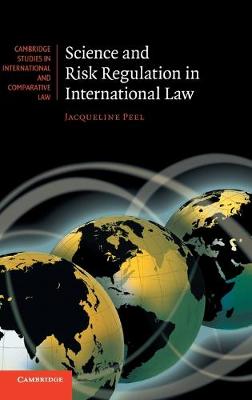
Science and Risk Regulation in International Law - Cambridge Studies in International and Comparative Law
hardback
Published:
4 November, 2010
hardback
Published:
4 November, 2010

Standard worldwide delivery by
Wed, August 5 - Mon, August 10
Order within
0
Popular Books by Jacqueline Peel
View All Books by Jacqueline Peel

Description
The regulation of risk is a preoccupation of contemporary global society and an increasingly important part of international law in areas ranging from environmental protection to international trade. This book examines a key aspect of international risk regulation - the way in which science and technical expertise are used in reaching decisions about how to assess and manage global risks. An interdisciplinary analysis is employed to illuminate how science has been used in international legal processes and global institutions such as the World Trade Organization. Case studies of risk regulation in international law are drawn from diverse fields including environmental treaty law, international trade law, food safety regulation and standard-setting, biosafety and chemicals regulation. The book also addresses the important question of the most appropriate balance between science and non-scientific inputs in different areas of international risk regulation.
More Details
| Type | Book |
|---|---|
| ISBN13 | 9780521768634 |
| ISBN10 | 0521768632 |
| Number Of Pages | 416 |
| Item Weight | 780 g |
| Product Dimensions | 159 x 235 x 23 mm |
| Publisher / Reseller | Cambridge University Press |
| Format | hardback |
See More +
Media Reviews
'… [proposes] developments of the law in ways which have a clear practical import.' Christopher A. Thomas, International and Comparative Law Quarterly
Author's Bio
Dr Jacqueline Peel is an Associate Professor of Law at the Melbourne Law School, University of Melbourne, Australia. Her research focuses on areas of domestic and international environmental law including climate change, the intersections between law and science, and the precautionary principle.