The Early Elizabethan Polity :William Cecil and the British Succession Crisis, 1558–1569 - Cambridge Studies in Early Modern British History
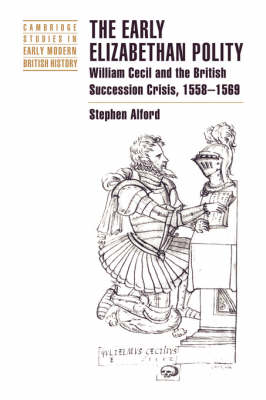
The Early Elizabethan Polity :William Cecil and the British Succession Crisis, 1558–1569 - Cambridge Studies in Early Modern British History
hardback
Published:
3 September, 1998
hardback
Published:
3 September, 1998

Standard worldwide delivery by
Tue, July 7 - Fri, July 10
Order within
0
Popular Books by Stephen Alford
View All Books by Stephen Alford
Description
Traditionally historians have argued that the court of Elizabeth I (1558–1603) was factional, divided between competing subjects who were manipulated by their Queen. This book provides a different account: of councillors who were united by two connected dangers, namely Catholic opposition to Protestant England and Elizabeth's refusal to marry or to settle England's succession. This alternative account of the first decade of Elizabeth's reign investigates three main areas. It challenges the notion that Elizabeth I and her councillors agreed on policy, and that the Queen and her secretary, William Cecil, formed an inseparable political partnership; it establishes the importance of rhetorical training and the relationship between education and Elizabethan debates on the issue of service to the Queen, balanced against service to the Commonwealth; and it deals with the radical political conditions of the first decade, and argues that the origins of later Elizabethan crises lay in the 1560s.
More Details
| Type | Book |
|---|---|
| ISBN13 | 9780521622189 |
| ISBN10 | 0521622182 |
| Number Of Pages | 288 |
| Item Weight | 590 g |
| Product Dimensions | 152 x 229 x 21 mm |
| Publisher / Reseller | Cambridge University Press |
| Format | hardback |
See More +
Media Reviews
'The book makes good use of Cecil's massive personal archive, the most extensively by far of any contemporary statesman or politician … the book does, certainly, reveal a familiar figure in a new light and disposes of Macaulay's caricature of him as a wooden yes-man.' Lincolnshire History and Archaeology