Global Change, Regional Response :The New International Context of Development
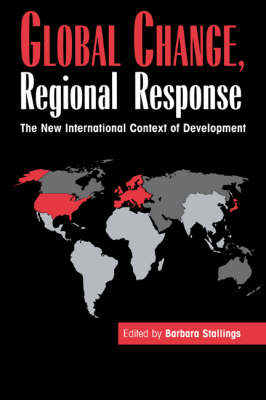
Global Change, Regional Response :The New International Context of Development
paperback
Published:
29 September, 1995

Popular Books by Barbara Stallings
View All Books by Barbara Stallings

Description
More Details
| Type | Book |
|---|---|
| ISBN13 | 9780521478069 |
| ISBN10 | 0521478065 |
| Number Of Pages | 432 |
| Item Weight | 570 g |
| Product Dimensions | 150 x 227 x 25 mm |
| Publisher / Reseller | Cambridge University Press |
| Format | paperback |
Media Reviews
'This is a unique book. It provides not only a valuable overview of global and regional trends but also a very interesting and provocative lens through which to view Third World development in the next 10–15 years. The authors are distinguished and it is refreshing to see the regional response chapters written by scholars from the regions. The conclusion is written with Barbara Stalling's characteristic clarity and elegance and offers a strong and potentially controversial thesis. Researchers and students alike will find this an invaluable addition to their reading on the political economy of the contemporary Third World.' Peter Evans, University of California, Berkeley
'This should be an agenda-setting collection. It reintroduces the international dimensions forcefully into the literature on the political economy of development.' Stephen Haggard, Graduate School of International Relations and Pacific Studies, University of California, San Diego