Extinctions :How Life Survives, Adapts and Evolves
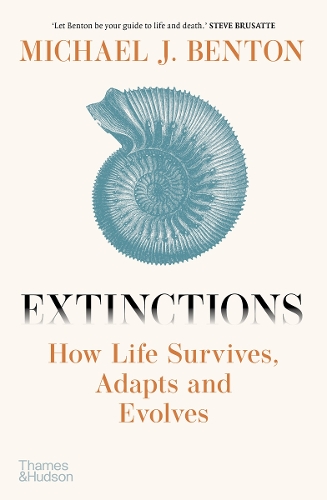
Extinctions :How Life Survives, Adapts and Evolves
hardback
Published:
7 September, 2023

Popular Books by Michael J. Benton
View All Books by Michael J. Benton
Description
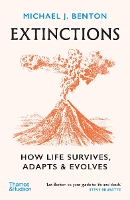
In this vast sweep of our Earth’s history, Michael Benton brings the deep past to life as never before. Deploying the cutting-edge tools in biology, chemistry, physics and geology that are transforming our understanding of previous environmental cataclysms – including the incredible new discovery of a hitherto unknown extinction event – he uncovers not only their lethal effects but also the processes that brought about such large-scale destruction.
Beginning with the oldest extinction, Benton investigates the Late Ordovician, which set the evolution of the first animals on an entirely new course; the late Devonian, brought on by global warming; the cataclysmic End-Permian, which wiped out over 90 per cent of all life on Earth; and, book-ending the age of the dinosaurs, the newly discovered Carnian Pluvial Event and the End-Cretaceous asteroid. He examines how global warming, acid rain, ocean acidification, erupting volcanoes and meteorite impact have affected conditions on Earth, the drastic consequences for global ecology, and how life in turn survived, adapted and evolved.
This expert retelling of scientific breakthroughs allows us to link long-ago upheavals to our modern crises. As today’s climate scientists and political leaders grapple to understand these processes and our planet enters the sixth great extinction, these insights from the past may hold the key to survival.
More Details
| Type | Book |
|---|---|
| ISBN13 | 9780500025468 |
| ISBN10 | 0500025460 |
| Number Of Pages | 304 |
| Item Weight | 640 g |
| Publisher / Reseller | Thames & Hudson Ltd |
| Format | hardback |
Media Reviews
'If you want to know how extinctions happen and how the fossil record is relevant to understanding our current biodiversity crisis, read this delightful book about death and the resilience of life!' - Steve Brusatte
'Combining the latest paleontological research with findings from his own expeditions, it’s a meticulously researched work' - Observer
'Fast-paced, clear and doesn’t skimp on the drama' - New Scientist
'Benton’s tone is refreshing … authoritative but readable, modest, occasionally witty and never pompous' - Geographical
'A brilliant account by a world-leading professor of palaeontology … extremely clear on what is a gripping story' - The Biologist
'Here, the focus is on life, not death, during this lightspeed journey through its history on Earth. Empowers the reader to act instead of paralysing them, and highlights the relevance of the Earth sciences in tackling one of the most pressing problems of our time' - Geoscientist
'Benton ... sets the highest standard for popular science writing. His enthusiasm and knowledge on the subject shine through the pages' - The Palaeontology Association
'Deeply informed and readable' - Nature
'Benton’s brilliant writing style makes the book enjoyable to read for both palaeontology enthusiasts and Earth science novices. Extinctions empowers the reader to act instead of paralysing them, and highlights the relevance of the Earth sciences in tackling one of the most pressing problems of our time' - Geoscientist
GoodReads Reviews
Author's Bio
Michael Benton is professor of Vertebrate Palaeontology and head of the world-leading Palaeobiology Research Group at the University of Bristol. He has written more than fifty books, including Dinosaurs: New Visions of a Lost World, The Dinosaurs Rediscovered and When Life Nearly Died, all published by Thames & Hudson. He was awarded an OBE for services to Palaeontology and community engagement and regularly appears in the media to discuss dinosaurs and understanding the history of life.