Connectomic Medicine :Guide to Brain AI in Treatment Decision Planning
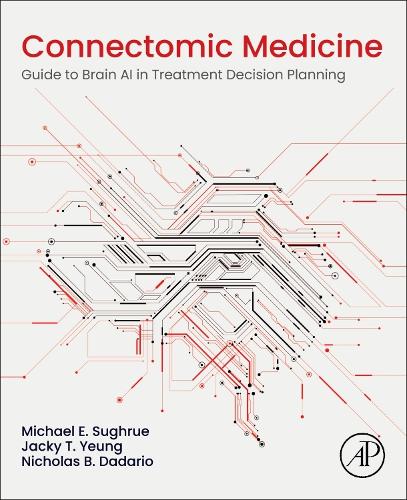
Connectomic Medicine :Guide to Brain AI in Treatment Decision Planning
paperback
Published:
5 December, 2023

Popular Books by Michael E. Sughrue
View All Books by Michael E. Sughrue
Description
More Details
| Type | Book |
|---|---|
| ISBN13 | 9780443190896 |
| ISBN10 | 0443190895 |
| Number Of Pages | 306 |
| Item Weight | 640 g |
| Publisher / Reseller | Elsevier Science Publishing Co Inc |
| Format | paperback |
Author's Bio
Dr. Sughrue is Associate Professor at the Department of Neurosurgery at Prince of Wales Hospital and Community Health Services in Sydney, Australia. One of the world’s leading neurosurgeons and researchers in connectomics, he is the former Director of the Brain Tumor Center at the University of Oklahoma, during which it grew to become one of the largest clinics in the US. He has lectured around the world on the management of glioma and the use of connectomics, having performed over 3,000 brain tumor surgeries to date and published over 250 peer-reviewed articles. In addition, he cofounded Omniscient Neurotechnology which is an innovative technology startup aimed at using AI to improve the care of patients with mental illness and brain disease. Dr. Yeung is a fellowship-trained neurosurgeon who started his residency in neurosurgery at Yale University in 2013 after completing undergraduate studies at University of British Columbia in Honors Physiology, and his MD degree at Michigan State University College of Human Medicine. He is a member of the American Association of Neurological Surgeons. He obtained his fellowship training at the Centre for Minimally Invasive Neurosurgery in Sydney, Australia under Dr. Charles Teo. During that time, he published widely on the use of machine learning to study the human functional connectome and was the first neurosurgeon to publish on the use of personalized pre-operative brain mapping during intracerebral surgeries. He is currently a funded neurosurgeon-scientist, mentored by pioneer immunologist Dr. Lieping Chen, with an active research focus at Yale University on identifying novel immunotherapies for the treatment of brain cancers. He acts as the Chief Research Officer for Cingulum Health, which is the first clinic in the world to leverage personalized connectomics with transcranial magnetic stimulation to treat patients with wide-ranging neurological and psychiatric conditions. Nicholas Dadario is an MD candidate at Robert Wood Johnson Medical School at Rutgers University. He graduated magna cum laude with President’s Honors in 2020 from Binghamton University in Integrative Neuroscience. In just three years of medical school, Nicholas has already published over 50 peer-reviewed articles and numerous book chapters on the use of machine learning and connectomics in neurosurgery under the mentorship of Dr. Michael Sughrue, MD. Nicholas was the recipient of the prestigious Neurosurgery Research & Education Foundation (NREF) Research Fellowship in which he studied the effect of a novel chemotherapy treatment on the brain connectome in patients with glioblastoma under the mentorship of Dr. Jeffrey Bruce, MD, and Dr. Peter Canoll, MD, PhD at Columbia University, NY. Currently, he is focused on understanding how a multi-omic perspective of the glioblastoma environment can leverage new therapeutic insights for brain tumor patients.