Conflict and Cooperation in Intelligence and Security Organisations :An Institutional Costs Approach - Studies in Intelligence
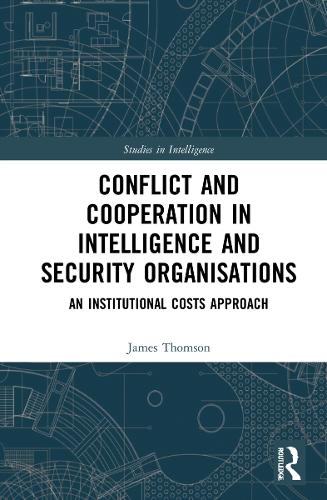
Conflict and Cooperation in Intelligence and Security Organisations :An Institutional Costs Approach - Studies in Intelligence
paperback
Published:
31 May, 2023

Popular Books by James Thomson
View All Books by James Thomson








Description
This book provides an institutional costs framework for intelligence and security communities to examine the factors that can encourage or obstruct cooperation.
The governmental functions of security and intelligence require various organisations to interact in a symbiotic way. These organisations must constantly negotiate with each other to establish who should address which issue and with what resources. By coupling adapted versions of transaction costs theories with socio-political perspectives, this book provides a model to explain why some cooperative endeavours are successful, whilst others fail. This framework is applied to counterterrorism and defence intelligence in the UK and the US to demonstrate that the view of good cooperation in the former and poor cooperation in the latter is overly simplistic. Neither is necessarily more disposed to behave cooperatively than the other; rather, the institutional costs created by their respective organisational architectures incentivise different cooperative behaviour in different circumstances.
This book will be of much interest to students of intelligence studies, organisational studies, politics and security studies.
More Details
| Type | Book |
|---|---|
| ISBN13 | 9780367619541 |
| ISBN10 | 0367619547 |
| Number Of Pages | 238 |
| Item Weight | 400 g |
| Publisher / Reseller | Taylor & Francis Ltd |
| Format | paperback |
Author's Bio
James Thomson has worked within the intelligence and security spheres for over 30 years, and he has received his PhD from Brunel University, UK.