Understanding Educational Leadership: People, Power and Culture
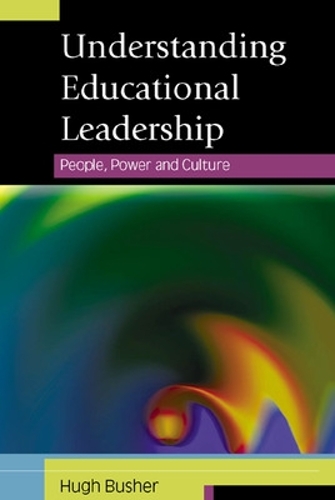
Understanding Educational Leadership: People, Power and Culture
paperback
Published:
16 June, 2006

Popular Books by Hugh Busher
View All Books by Hugh Busher
Description
Drawing on research, the book examines topics such as the nature of leadership, especially distributed and teacher leadership; the politics of education management; the construction of inclusive cultures in schools; school improvement; and the construction of collaborative and inclusive work groups. It uses a range of critical perspectives to examine processes of change and the relationships of people in school communities to each other and to their social, economic and policy contexts. The book argues that it is essential to develop inclusive education in order to promote student engagement, social justice and equity within formal education.
Understanding Educational Leadership is key reading for teachers, headteachers, school leaders, policy makers, Education students and practitioners, and others who have an interest in improving schooling.
More Details
| Type | Book |
|---|---|
| ISBN13 | 9780335217175 |
| ISBN10 | 0335217176 |
| Number Of Pages | 200 |
| Item Weight | 300 g |
| Product Dimensions | 150 x 230 x 9 mm |
| Publisher / Reseller | Open University Press |
| Format | paperback |
Author's Bio
Dr Hugh Busher is a senior lecturer in the School of Education, University of Leicester, where he is deputy director of the international Doctor of Education programme. He has had extensive experience of teaching in secondary schools and in universities where he has supervised Trainee teachers as well as Masters and Doctorla students. He is Coordinator of a British Educational Research Association (BERA) Special Interest Group (SIG) on Leading and Managing Schools and Colleges and a member of BERA Council. His research interests focus on aspects of Education that include: school-based leadership in particular socio-political contexts; the construction of organisational cultures of inclusion and social justice; teacher professional development; and the impact of power and values on the micro-politics of school-based decision-making.