When you buy a used copy YOU SAVE

0.82Kg of CO2

102 litre(s) of Water

0.0061 Tree(s)

1 book donated to global literacy projects
THEORIZING CLASSICAL SOCIOLOGY
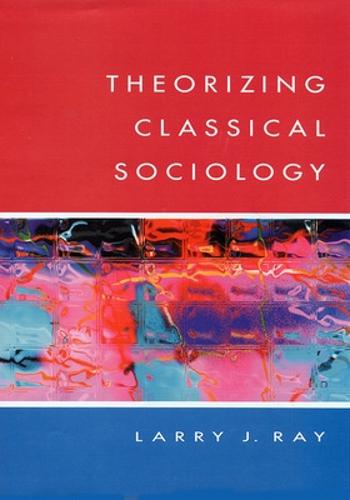
THEORIZING CLASSICAL SOCIOLOGY
paperback
Published:
16 November, 1999
paperback
Published:
16 November, 1999

Standard worldwide delivery by
Tue, July 7 - Fri, July 10
Order within
0

Condition:
USED
$9.91
RRP
$43.54
You save $33.63 (77%)
Available
1
in stock
FREE Returns within 30 days
Popular Books by Larry Ray
View All Books by Larry Ray

Description
* How did classical sociology emerge and take shape?
* What is the significance of classical sociology for current theoretical debates?
* How can the classical tradition in social theory inform our understanding of the crisis of modernity?
Social theory has been formed through elaboration and critique of the classical tradition, and this introductory volume illuminates current theoretical terrain by examining major classical theories - of Saint-Simon, Comte, Marx, Durkheim, Dilthey, Tonnies, Simmel and Weber - highlighting recurring themes and debates. It explains how classical sociology emerged through a debate with the Enlightenment, in which the concept of the 'social' took shape. This was constructed around various themes emphasizing contrasting components of social life - including material, cultural, rational and moral factors. These divergent theorizations set the scene for the play of theoretical oppositions that characterize much subsequent theoretical dispute. Along with these debates there were questions about the very identity of sociology, which in turn relate to a core issue in the discipline - grasping the crisis of modernity. This authoritative text introduces the key issues of classical sociology to undergraduates, making use of student-friendly features such as clear summaries, further reading and a glossary. It lays the foundations for an understanding of contemporary discussion, and will also be recognized at the postgraduate level as a key reference in the field.
* What is the significance of classical sociology for current theoretical debates?
* How can the classical tradition in social theory inform our understanding of the crisis of modernity?
Social theory has been formed through elaboration and critique of the classical tradition, and this introductory volume illuminates current theoretical terrain by examining major classical theories - of Saint-Simon, Comte, Marx, Durkheim, Dilthey, Tonnies, Simmel and Weber - highlighting recurring themes and debates. It explains how classical sociology emerged through a debate with the Enlightenment, in which the concept of the 'social' took shape. This was constructed around various themes emphasizing contrasting components of social life - including material, cultural, rational and moral factors. These divergent theorizations set the scene for the play of theoretical oppositions that characterize much subsequent theoretical dispute. Along with these debates there were questions about the very identity of sociology, which in turn relate to a core issue in the discipline - grasping the crisis of modernity. This authoritative text introduces the key issues of classical sociology to undergraduates, making use of student-friendly features such as clear summaries, further reading and a glossary. It lays the foundations for an understanding of contemporary discussion, and will also be recognized at the postgraduate level as a key reference in the field.
More Details
| Type | Book |
|---|---|
| ISBN13 | 9780335198658 |
| ISBN10 | 0335198651 |
| Number Of Pages | 204 |
| Item Weight | 347 g |
| Product Dimensions | 170 x 237 x 12 mm |
| Publisher / Reseller | Open University Press |
| Format | paperback |
See More +
Author's Bio
Larry Ray is Professor of Sociology at the University of Kent. His publications include Rethinking Critical Theory (Sage, 1993), Social Theory and the Crisis of State Socialism (Edward Elgar, 1996), and he is co-editor (with Michael Reed) of Organizing Modernity: New Weberian Perspectives on Work and Organization (Routledge, 1994) and (with Andrew Sayer) of Culture and Economy After the Cultural Turn (Sage, 1999).