Why Dissection? :Animal Use in Education
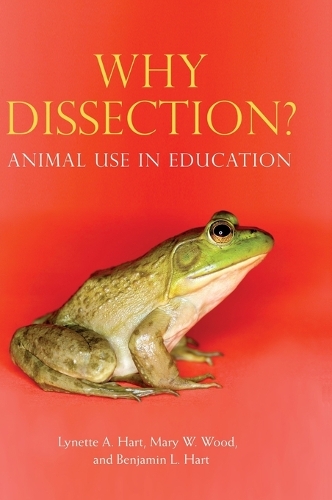
Why Dissection? :Animal Use in Education
hardback
Published:
28 February, 2008

Popular Books by Lynette A. Hart
View All Books by Lynette A. Hart
Description
More Details
| Type | Book |
|---|---|
| ISBN13 | 9780313323904 |
| ISBN10 | 0313323909 |
| Number Of Pages | 240 |
| Item Weight | 652 g |
| Publisher / Reseller | Bloomsbury Publishing Plc |
| Format | hardback |
Media Reviews
Why does animal dissection continue to be a hallmark of high school biology curricula when it fails to explicitly appear in most educational standards or frameworks? This controversial yet enduring facet of science classrooms is dealt with in a comprehensive and well-written new book which is grounded in a rich historical and philosophical context. Of particular interest are the sections that deal directly with national and state standards, and discuss the sometimes conflicting objectives of pre-college science education and the related areas of health and veterinary training. In subsequent chapters, teachers are offered resources which serve to empower them to consider viable alternatives to the practice. The diminishing educational benefits of dissection and the overall welfare of students are prevalent themes in this book. Hart, Wood and Hart note this topic is fraught with emotional arguments, and they adeptly manage to preserve professional and scholarly discourse while respecting the very personal nature of this topic. This book is best for all preservice and practicing biology teachers, curriculum coordinators, and those interested in policy and standards across science, veterinary, and health education. Highly recommended. Upper-division undergraduates and up. * Choice *
Author's Bio
Lynette A. Hart is professor in the Department of Population Health and Reproduction in the School of Veterinary Medicine at the University of California, Davis. Mary W. Wood is Librarian in Health Sciences at the Carlson Health Sciences Library, University of California, Davis. Benjamin L. Hart is Distinguished Professor Emeritus of Behavior and Physiology in the Department of Anatomy, Physiology, and Cell Biology in the School of Veterinary Medicine at the University of California, Davis.