Blood, Sweat and Arrogance :The Myths of Churchill's War
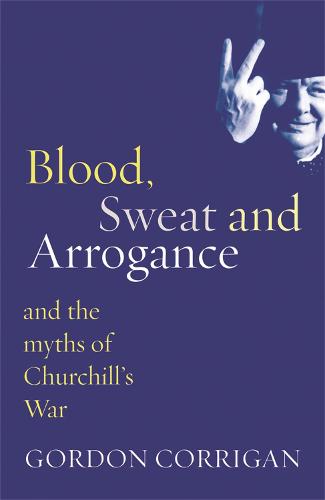
Blood, Sweat and Arrogance :The Myths of Churchill's War
paperback
Published:
15 March, 2007

Popular Books by Gordon Corrigan
View All Books by Gordon Corrigan

Description
Why the British forces fought so badly in World War II and who was to blame
Gordon Corrigan's Mud, Blood and Poppycock overturned the myths that surround the First World War. Now he challenges our assumptions about the Second World War in this brilliant, caustic narrative that exposes just how close Britain came to losing. He reveals how Winston Churchill bears a heavy responsibility for the state of our forces in 1939, and how his interference in military operations caused a string of disasters. The reputations of some of our most famous generals are also overturned: above all, Montgomery, whose post-war stature owes more to his skill with a pen than talent for command. But this is not just a story of personalities.
Gordon Corrigan investigates how the British, who had the biggest and best army in the world in 1918, managed to forget everything they had learned in just twenty years. The British invented the tank, but in 1940 it was the Germans who showed the world how to use them. After we avoided defeat, but the slimmest of margins, it was a very long haul to defeat Hitler's army, and one in which the Russians would ultimately bear the heaviest burden.
More Details
| Type | Book |
|---|---|
| ISBN13 | 9780304367382 |
| ISBN10 | 0304367389 |
| Number Of Pages | 528 |
| Item Weight | 380 g |
| Product Dimensions | 128 x 196 x 34 mm |
| Publisher / Reseller | Orion Publishing Co |
| Format | paperback |
Media Reviews
This story has been told many times before but it gains substantially from this retelling of it - brilliantly described and lucidly explained. Corrigan also peppers his narrative with an engrossing array of military knowledge * SPECTATOR *
Well worth reading * SUNDAY TIMES *
Author's Bio
The author was commissioned from the Royal Military Academy, Sandhurst in 1962 and retired from the Brigade of Gurkhas in 1998. A member of the British Commission for Military History and a Fellow of the Royal Asiatic Society, he speaks fluent Nepali and is a keen horseman.