America's First Cuisines
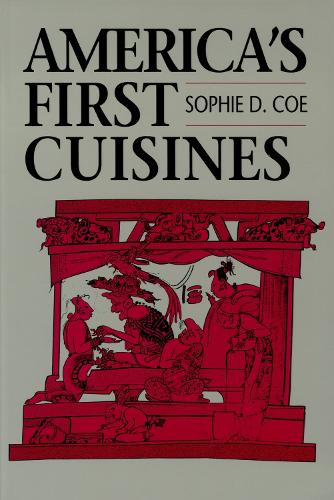
America's First Cuisines
paperback
Published:
1 March, 1994

Popular Books by Sophie D. Coe
View All Books by Sophie D. Coe
Description
After long weeks of boring, perhaps spoiled sea rations, one of the first things Spaniards sought in the New World was undoubtedly fresh food. Probably they found the local cuisine strange at first, but soon they were sending American plants and animals around the world, eventually enriching the cuisine of many cultures.
Drawing on original accounts by Europeans and native Americans, this pioneering work offers the first detailed description of the cuisines of the Aztecs, the Maya, and the Inca. Sophie Coe begins with the basic foodstuffs, including maize, potatoes, beans, peanuts, squash, avocados, tomatoes, chocolate, and chiles, and explores their early history and domestication. She then describes how these foods were prepared, served, and preserved, giving many insights into the cultural and ritual practices that surrounded eating in these cultures. Coe also points out the similarities and differences among the three cuisines and compares them to Spanish cooking of the period, which, as she usefully reminds us, would seem as foreign to our tastes as the American foods seemed to theirs. Written in easily digested prose, America's First Cuisines will appeal to food enthusiasts as well as scholars.
More Details
| Type | Book |
|---|---|
| ISBN13 | 9780292711594 |
| ISBN10 | 029271159X |
| Number Of Pages | 288 |
| Item Weight | 426 g |
| Product Dimensions | 152 x 229 x 20 mm |
| Publisher / Reseller | University of Texas Press |
| Format | paperback |
Media Reviews
Sophie Coe, anthropologist and culinary historian, gives us a cook's tour of the nuclear areas of New World civilization. Her book is a botanically, zoologically, and nutritionally informed synthesis of information on the New World's contribution to the world's inventory of foodstuffs and, most importantly, on how the use of these foodstuffs coalesced in the culinary cultures of the Aztec, Maya, and Inca. It is the first work of its kind on the past civilizations of the New World. . . . This book is essential reading for Americanist anthropologists as well as scholars in a variety of other disciplines, and it constitutes serious pleasure reading for lay readers who are cooks, eaters, and students of foodways. (American Anthropologist) Provides tantalizing snapshots of Native American cuisine and culture, especially at the first intersection with the Europeans. . . . It must not be missed by anyone professing a serious interest in America's cuisines for scientific or gustatory reasons. . . . Appropriate for any interested reader as well as for the academic consumer, this volume presents a wealth of excellent information and is a marvelous read. (Nahua Newsletter) Hardly anyone who works with food history can afford to skip reading the New World staples and produce chapters, and once started on the book, won't want to stop anyway. Coe's story of the early New World civilizations and their encounters with Europeans is extraordinarily readable, interwoven with descriptions of food, how it was prepared and served, its significance to the people who ate it. Coe treats the New World people respectfully and with dignity, and at times the narrative is unbearably sad as it describes their conquest by the Spanish. (Food History News) Sophie Coe . . . was as rare in our time as her hero, Bernardino SahagÚn, was in his: a culinary anthropologist who gave equal weight to both parts of that phrase.... However, despite the strong culinary thrust of the text, the 'discovery' of New World foods is an aspect of her story that-although extensively discussed-becomes. finally, almost beside the point. Her real subject is the tragic collision of two worldviews perhaps least likely to understand, let alone appreciate, each other. If mestizo culture remains as volatile and potent as a vinaigrette, it is because, even today, the two continue to coexist less like water and chocolate than oil and vinegar. (Cook Book)
Author's Bio
Sophie D. Coe (1933-1994) held a Ph.D. in anthropology from Harvard University. She researched and wrote extensively on the cuisines of native Latin America.