I Don't Care - Penguin International Writers
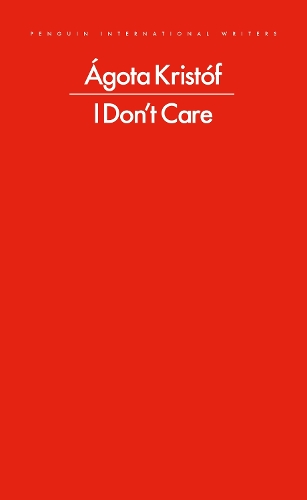
I Don't Care - Penguin International Writers
paperback
Published:
21 August, 2025

Popular Books by Ágota Kristóf
View All Books by Ágota Kristóf
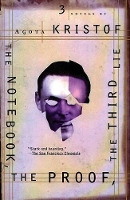
Description
Never before translated short stories by the legendary Ágota Kristóf
'One of the 20th century's greatest writers' Camilla Grudova
'Pure genius' Max Porter
I don’t care: it’s not even pretty. The song is sad, and old, so old.
I Don't Care presents the best short fiction by the Hungarian master Ágota Kristóf, selected by the author herself and available in English for the first time. Written immediately before her acclaimed Notebook trilogy, the works here oscillate between parables, surrealist anecdotes, and stories animated by a realism stripped to the bone. By turns harrowing and whimsical, cruel and sharply funny, Kristóf’s world shifts our gaze to a shared reality, past and present. Here exile and existential alienation are undeniable – as is the force of every sentence, making for extraordinary and essential reading.
Translated from French by Chris Andrews
More Details
| Type | Book |
|---|---|
| ISBN13 | 9780241774052 |
| ISBN10 | 0241774055 |
| Number Of Pages | 96 |
| Item Weight | 84 g |
| Product Dimensions | 116 x 182 x 10 mm |
| Publisher / Reseller | Penguin Books Ltd |
| Format | paperback |
Media Reviews
Pure genius -- Max Porter
At a short story level, Kristóf – one of the 20th century’s great writers – reminds us what startling potential and transcendental power the form holds. The stories in I Don’t Care are fairytales from a strange and illuminating landscape -- Camilla Grudova
These stories are timeless stark fables – catnip for a readership that has developed a taste for existential angst -- John Self * The Guardian *
The stories in I Don’t Care by Ágota Kristóf might examine a small moment minutely or tell a person’s whole life in a handful of words… Fantastic * Times Literary Supplement *
Her descriptions – of those with whom she escaped and whose sense of isolation eventually leads them back to Hungary even at the cost of their lives, as well as those whose sense of despair brings them to suicide – offer an uncomfortable insight into the extreme vulnerability of those obliged to seek asylum abroad -- Eimear McBride
Stark and haunting * San Francisco Chronicle *
Mischievous and mournful… moves at a velocity that puts one in mind of Italo Calvino. Readers of modernist European fiction ought to snatch this up * Publishers Weekly *
Many of Kristóf's stark vignettes, reported in unflinching detail, have a cool, disturbing power – part documentary-like, part surreal that is fierce and distinctive * Kirkus Reviews *
For Kristóf, fiction is the only thing that might provide an escape from solitude... Her novels likewise lead to an engagement with the world. They open things up because of how they undermine what we consider to be true; they shatter a supposed unity. Kristóf’s writing shows us both the pleasure and the necessity of literary refraction -- Missouri Williams * The Nation *
Kristóf’s sentences are like skeletons, commemorations of indescribable sadness that have been meticulously scrubbed of gore and gristle. She seems to sculpt her stories by omission, the great unspoken throughout her books being Hungarian. One might think of Kristóf’s fiction as an act of recuperation, an expression of loss that preserves loss in the form -- Jennifer Krasinski * The New Yorker *
Author's Bio
Ágota Kristóf (Author)
Ágota Kristóf was born in Csikvánd, Hungary, in 1935. Aged twenty-one, Kristóf and her husband and four-month-old daughter fled the Soviet repression of the Hungarian Uprising to Austria and were resettled in French-speaking Switzerland. Working in a factory, Kristóf slowly learned the language of her adopted country. Her first novel, The Notebook (1986), won the European Prize for French literature and was translated into forty languages. Kristóf’s other work included plays and stories as well as The Proof (1988) and The Third Lie (1991), which complete the trilogy begun with The Notebook. She died in 2011.
Chris Andrews (Translator)
Chris Andrews was born in Newcastle, Australia, in 1962. He has translated Roberto Bolaño, César Aira, and Kaouther Adimi, and received the Valle-Inclán Prize and the French-American Foundation Translation Prize for his translations. Andrews has published two collections of poems, Cut Lunch and Lime Green Chair, for which he won the Anthony Hecht Poetry Prize.