Unequal Cities :Overcoming Anti-Urban Bias to Reduce Inequality in the United States
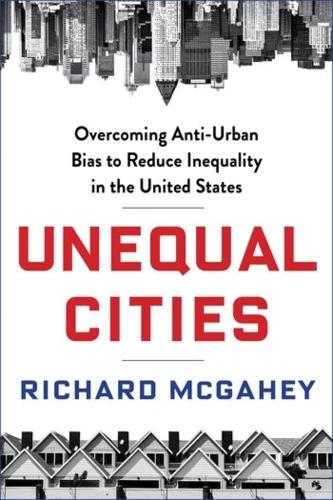
Unequal Cities :Overcoming Anti-Urban Bias to Reduce Inequality in the United States
hardback
Published:
27 December, 2022

Popular Books by Richard McGahey
View All Books by Richard McGahey
Description
Economist Richard McGahey explores how cities can foster equitable economic growth despite the obstacles in their way. Drawing on economic and historical analysis as well as his extensive experience in government and philanthropy, he examines the failures of public policy and conventional economic wisdom that have led to the neglect of American cities and highlights opportunities for reform. Unequal Cities features detailed case studies of New York, Detroit, and Los Angeles, tracing how their attempts to achieve greater equity foundered because of the fiscal and political constraints imposed on them. McGahey identifies key lessons about the political coalitions that can overcome anti-urban biases, arguing that alliances among unions, environmentalists, and communities of color can help cities thrive. But he warns that cities cannot solve inequality on their own: political action at state and federal levels is necessary to achieve systemic change.
Shedding light on the forces that produced today’s dysfunction and disparities, Unequal Cities provides timely policy prescriptions to promote both growth and equity.
More Details
| Type | Book |
|---|---|
| ISBN13 | 9780231173346 |
| ISBN10 | 0231173342 |
| Number Of Pages | 312 |
| Item Weight | 1000 g |
| Publisher / Reseller | Columbia University Press |
| Format | hardback |
Media Reviews
Richard McGahey’s book shows what many economists and pundits get wrong in both downplaying and justifying the severe inequality of power, resources, and outcomes, which is clearly tied to race and racism, within America’s cities and metro regions. Unequal Cities will help policy makers and change advocates avoid the mistakes of the past and devise solutions for more inclusive futures. -- Darrick Hamilton, founding director, Institute on Race, Power, and Political Economy, The New School
Unequal Cities offers a definitive account of anti-city bias in federal and state policy. The meticulously researched analysis of how activists and elected officials in Detroit, Los Angeles and New York attempted to pursue policies to create a more equitable city reveals that cities cannot accomplish structural changes, including addressing racism, in an environment in which policy is stacked against them. -- Joan Fitzgerald, author of Greenovation: Urban Leadership on Climate Change
America’s cities drive economic growth, but at the unfair price of pervasive inequality. Richard McGahey’s book shows us that’s no accident. His economic analysis shows equality and growth can be linked, and the book’s case studies and policy ideas can help change makers and philanthropic leaders in their fight for shared prosperity. -- Michelle DePass, former CEO and past president, Meyer Memorial Trust
As a sophisticated observer and influential participant in urban policy making, McGahey makes a powerful case that inequality hampers and warps urban economic development and offers fruitful insights as to its sources and possible remedies. He offers a frank assessment of how economic thinking can (or cannot) guide us on ways to improve policies and outcomes. -- John Mollenkopf, coeditor of Unsettled Americans: Metropolitan Context and Civic Leadership for Immigrant Integration
Unequal Cities offers a superb and clear argument, pointing out the cities drive the economy but also are sites of inequality. Its three rich case studies allow us to understand the heterogeneity of the urban experience. It really gets so much right. -- Manuel Pastor, coauthor of Solidarity Economics: Why Mutuality and Movements Matter
A very accessible depiction of some of the key issues facing the people of the United States today, providing rich detail for those interested in urban policy and for especially for readers in the case-study cities. * EH.net *
Though McGahey is clearly writing for economists and policymakers, I would not hesitate to recommend this book to graduate or (advanced) undergraduate students of urban studies, public policy, and related fields....McGahey offers an important and compelling argument. * Contemporary Sociology *
Author's Bio
Richard McGahey is an economist and senior fellow at the Schwartz Center for Economic Policy Analysis and the Institute on Race, Power, and Political Economy, both within The New School. He served as executive director of the Congressional Joint Economic Committee, assistant secretary for policy at the U.S. Department of Labor, and in senior governmental positions in New York State and New York City. McGahey was director of impact assessment and a program officer for economic development at the Ford Foundation.