Dewey for Artists
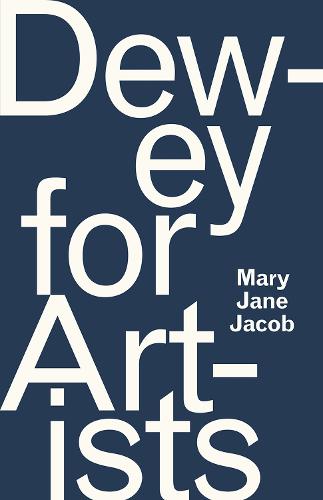
Dewey for Artists
paperback
Published:
29 January, 2019
paperback
Published:
29 January, 2019

Standard worldwide delivery by
Mon, July 20 - Thu, July 23
Order within
0
Popular Books by Mary Jane Jacob
View All Books by Mary Jane Jacob



Description
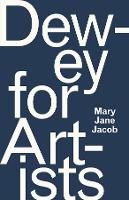
John Dewey is known as a pragmatic philosopher and progressive architect of American educational reform, but some of his most important contributions came in his thinking about art.
Dewey argued that there is strong social value to be found in art, and it is artists who often most challenge our preconceived notions. Dewey for Artists shows us how Dewey advocated for an “art of democracy.” Identifying the audience as co-creator of a work of art by virtue of their experience, he made space for public participation. Moreover, he believed that societies only become—and remain—truly democratic if its citizens embrace democracy itself as a creative act, and in this he advocated for the social participation of artists.
Throughout the book, Mary Jane Jacob draws on the experiences of contemporary artists who have modeled Dewey’s principles within their practices. We see how their work springs from deeply held values. We see, too, how carefully considered curatorial practice can address the manifold ways in which aesthetic experience happens and, thus, enable viewers to find greater meaning and purpose. And it is this potential of art for self and social realization, Jacob helps us understand, that further ensures Dewey’s legacy—and the culture we live in.
Dewey argued that there is strong social value to be found in art, and it is artists who often most challenge our preconceived notions. Dewey for Artists shows us how Dewey advocated for an “art of democracy.” Identifying the audience as co-creator of a work of art by virtue of their experience, he made space for public participation. Moreover, he believed that societies only become—and remain—truly democratic if its citizens embrace democracy itself as a creative act, and in this he advocated for the social participation of artists.
Throughout the book, Mary Jane Jacob draws on the experiences of contemporary artists who have modeled Dewey’s principles within their practices. We see how their work springs from deeply held values. We see, too, how carefully considered curatorial practice can address the manifold ways in which aesthetic experience happens and, thus, enable viewers to find greater meaning and purpose. And it is this potential of art for self and social realization, Jacob helps us understand, that further ensures Dewey’s legacy—and the culture we live in.
More Details
| Type | Book |
|---|---|
| ISBN13 | 9780226580449 |
| ISBN10 | 022658044X |
| Number Of Pages | 176 |
| Item Weight | 312 g |
| Product Dimensions | 14 x 22 x 1 mm |
| Publisher / Reseller | The University of Chicago Press |
| Format | paperback |
See More +
Media Reviews
The John Dewey that emerges from Mary Jane Jacob's introspective and affirmative study speaks directly to the artist of the twenty-first century by insisting on the poetry of everyday experience, the necessity of making as a process of worldly understanding, and the universal significance of art as an essential form of human knowledge. Move over, Joseph Beuys, there is a century-old theorist of socially engaged art to contend with who--thanks to Jacob's compelling and accessible writing, as well as her deft use of specific contemporary art works as models of Dewey's progressive-era ideas--springs forth to surprise and challenge us today. --Gregory Sholette, author of Delirium and Resistance: Activist Art and the Crisis of Capitalism