The Hidden Wealth of Nations :The Scourge of Tax Havens
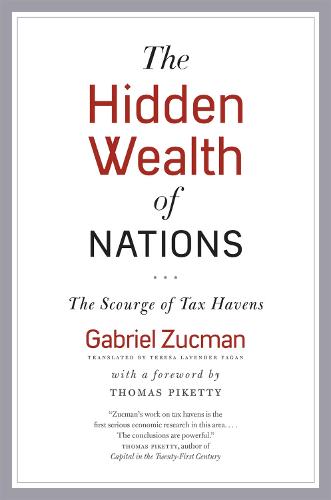
The Hidden Wealth of Nations :The Scourge of Tax Havens
paperback
Published:
26 August, 2016

Popular Books by Gabriel Zucman
View All Books by Gabriel Zucman


Description
More Details
| Type | Book |
|---|---|
| ISBN13 | 9780226422640 |
| ISBN10 | 022642264X |
| Number Of Pages | 200 |
| Item Weight | 255 g |
| Product Dimensions | 15 x 23 x 1 mm |
| Publisher / Reseller | The University of Chicago Press |
| Format | paperback |
Media Reviews
Zucman has produced an important book, above all because of his effort to calculate the magnitude of the world s hidden wealth. . . . A strong virtue of Zucman s book is that it puts a bright spotlight on an area in which significant reforms might appeal to people who otherwise disagree on a great deal. You might believe that the tax system should be made more progressive, or you might believe that it should be made less so. But whatever you think, you are unlikely to support a situation in which trillions of dollars are hardly taxed at all.
--Cass Sunstein New York Review of Books
Gabriel Zucman has two goals in his new book, The Hidden Wealth of Nations to specify the costs of tax havens, and to figure out how to reduce those costs. He writes with moral passion, even outrage; he sees tax havens as a scourge.
Zucman has produced an important book, above all because of his effort to calculate the magnitude of the world s hidden wealth. . . . A strong virtue of Zucman s book is that it puts a bright spotlight on an area in which significant reforms might appeal to people who otherwise disagree on a great deal. You might believe that the tax system should be made more progressive, or you might believe that it should be made less so. But whatever you think, you are unlikely to support a situation in which trillions of dollars are hardly taxed at all. --Cass Sunstein New York Review of Books
Gabriel Zucman has two goals in his new book, The Hidden Wealth of Nations to specify the costs of tax havens, and to figure out how to reduce those costs. He writes with moral passion, even outrage; he sees tax havens as a scourge.
Zucman has produced an important book, above all because of his effort to calculate the magnitude of the world s hidden wealth. . . . A strong virtue of Zucman s book is that it puts a bright spotlight on an area in which significant reforms might appeal to people who otherwise disagree on a great deal. You might believe that the tax system should be made more progressive, or you might believe that it should be made less so. But whatever you think, you are unlikely to support a situation in which trillions of dollars are hardly taxed at all. --Cass Sunstein New York Review of Books
A short, pioneering guide to estimating the trillions of dollars moved to tax havens to evade or avoid paying taxes to the nations from which this expanding mountain of money was made. Zucman proposes measures to end the party of these giant tax escapes and make tax avoiders and evaders pay their fair share.
--Ralph Nader
A short, pioneering guide to estimating the trillions of dollars moved to tax havens to evade or avoid paying taxes to the nations from which this expanding mountain of money was made. Zucman proposes measures to end the party of these giant tax escapes and make tax avoiders and evaders pay their fair share.
--Ralph Nader
Gabriel Zucman has two goals in his new book, The Hidden Wealth of Nations to specify the costs of tax havens, and to figure out how to reduce those costs. He writes with moral passion, even outrage; he sees tax havens as a 'scourge.'
Zucman has produced an important book, above all because of his effort to calculate the magnitude of the world's hidden wealth. . . . A strong virtue of Zucman's book is that it puts a bright spotlight on an area in which significant reforms might appeal to people who otherwise disagree on a great deal. You might believe that the tax system should be made more progressive, or you might believe that it should be made less so. But whatever you think, you are unlikely to support a situation in which trillions of dollars are hardly taxed at all. --Cass Sunstein New York Review of Books
Author's Bio
Gabriel Zucman is assistant professor of economics at the University of California, Berkeley. Teresa Lavender Fagan is a freelance translator living in Chicago.