Islam Translated :Literature, Conversion, and the Arabic Cosmopolis of South and Southeast Asia - South Asia Across the Disciplines
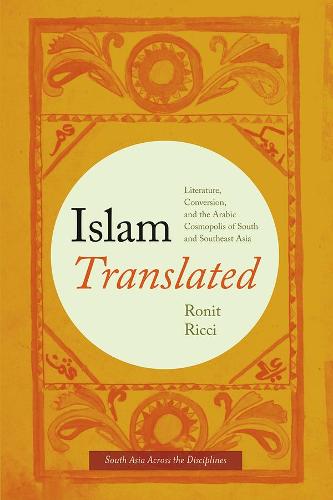
Islam Translated :Literature, Conversion, and the Arabic Cosmopolis of South and Southeast Asia - South Asia Across the Disciplines
paperback
Published:
1 April, 2016

Popular Books by Ronit Ricci
View All Books by Ronit Ricci
Description
In Islam Translated, Ronit Ricci uses the Book of One Thousand Questions—from its Arabic original to its adaptations into the Javanese, Malay, and Tamil languages between the sixteenth and twentieth centuries—as a means to consider connections that linked Muslims across divides of distance and culture. Examining the circulation of this Islamic text and its varied literary forms, Ricci explores how processes of literary translation and religious conversion were historically interconnected forms of globalization, mutually dependent, and creatively reformulated within societies making the transition to Islam.
More Details
| Type | Book |
|---|---|
| ISBN13 | 9780226380537 |
| ISBN10 | 022638053X |
| Number Of Pages | 335 |
| Item Weight | 482 g |
| Product Dimensions | 15 x 23 x 2 mm |
| Publisher / Reseller | The University of Chicago Press |
| Format | paperback |
Media Reviews
Islam Translated is a remarkable achievement, at once theoretically sophisticated and grounded in tremendously impressive archival research. Grappling with questions fundamental to the humanities, this book promises to serve as a model for future scholarship in area studies and comparative literature.
--Karen Thronber, Harvard University New Asia Books
Ronit Ricci has succeeded in writing a book that combines scrupulous examination of textual shifts, concepts, imagery, and genre with a tremendously persuasive argument and a stimulating reading of the differences in translation process between languages and cultures. This book helps us to understand the differing ways in which Arabic and Arabic writings moved into other literatures and takes readers through a rich and detailed journey of imagery and language. This is a fascinating book that will appeal widely to anyone concerned with translation in its historical and cultural contexts.
--Michael C. Gilsenan, New York University
This is a trail-blazing study about the dynamics of writing within the Arabic cosmopolis around the Indian Ocean, a topic that awaits further explorations. Ronit Ricci s tantalizing close readings of particular versions of the Book of One Thousand Questions show an impressive knowledge and again and again open it up to new views. Islam Translated breathes enthusiasm and pleasure.
--Hendrik Maier, University of California, Riverside
Islam Translated is a remarkable achievement, at once theoretically sophisticated and grounded in tremendously impressive archival research. Grappling with questions fundamental to the humanities, this book promises to serve as a model for future scholarship in area studies and comparative literature.
--Karen Thronber, Harvard University New Asia Books
Ronit Ricci has succeeded in writing a book that combines scrupulous examination of textual shifts, concepts, imagery, and genre with a tremendously persuasive argument and a stimulating reading of the differences in translation process between languages and cultures. This book helps us to understand the differing ways in which Arabic and Arabic writings moved into other literatures and takes readers through a rich and detailed journey of imagery and language. This is a fascinating book that will appeal widely to anyone concerned with translation in its historical and cultural contexts.
--Michael C. Gilsenan, New York University
This is a trail-blazing study about the dynamics of writing within the Arabic cosmopolis around the Indian Ocean, a topic that awaits further explorations. Ronit Ricci's tantalizing close readings of particular versions of the Book of One Thousand Questions show an impressive knowledge and again and again open it up to new views. Islam Translated breathes enthusiasm and pleasure.
--Hendrik Maier, University of California, Riverside
Islam Translated is a remarkable achievement, at once theoretically sophisticated and grounded in tremendously impressive archival research. Grappling with questions fundamental to the humanities, this book promises to serve as a model for future scholarship in area studies and comparative literature.
--Karen Thronber, Harvard University New Asia Books