The Pure Theory of Capital
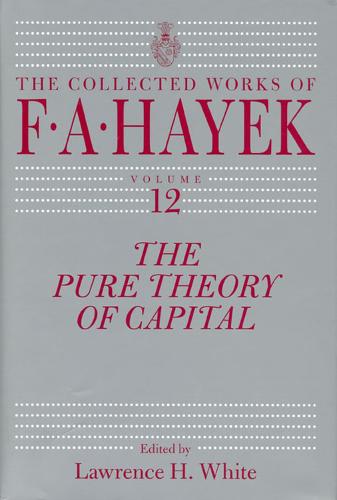
The Pure Theory of Capital
hardback
Published:
8 May, 2007
hardback
Published:
8 May, 2007

Standard worldwide delivery by
Tue, August 11 - Fri, August 14
Order within
0
Condition:
NEW
$101.36
RRP
$106.83
You save $5.48 (5%)
Available
20
in stock
FREE Returns within 30 days
Popular Books by F. A. Hayek
View All Books by F. A. Hayek
Description
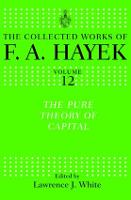
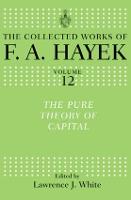
"The Pure Theory of Capital", F. A. Hayek's long-overlooked, little-understood volume, was his most detailed work in economic theory. Originally published in 1941 when fashionable economic thought had shifted to John Maynard Keynes, Hayek's manifesto of capital theory is available again for today's students and economists to discover. With a new introduction by Hayek expert Lawrence H. White, who firmly situates the book not only in historical and theoretical context but within Hayek's own life and his struggle to complete the manuscript, this edition commemorates the celebrated scholar's last major work in economics. Offering a detailed account of the equilibrium relationships between inputs and outputs in an economy, Hayek's stated objective was to make capital theory - which had previously been devoted almost entirely to the explanation of interest rates - "useful for the analysis of the monetary phenomena of the real world." His ambitious goal was nothing less than to develop a capital theory that could be fully integrated into business cycle theory.
More Details
| Type | Book |
|---|---|
| ISBN13 | 9780226320991 |
| ISBN10 | 0226320995 |
| Number Of Pages | 464 |
| Item Weight | 1000 g |
| Publisher / Reseller | The University of Chicago Press |
| Format | hardback |
| Edition | New edition |
See More +
Author's Bio
F. A. Hayek (1899 - 1992), recipient of the Presidential Medal of Freedom in 1991 and cowinner of the Nobel Memorial Prize in Economics in 1974, was a pioneer in monetary theory and a leading proponent of classical liberalism in the twentieth century. Lawrence H. White is the F. A. Hayek Professor of Economic History at the University of Missouri - St. Louis. He is the author of several books, including, most recently, The Theory of Monetary Institutions. He is currently a visiting professor at Queen's University Belfast.