Reforms and Economic Transformation in India - Studies in Indian Economic Policies
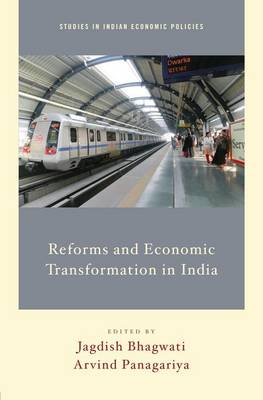
Reforms and Economic Transformation in India - Studies in Indian Economic Policies
hardback
Published:
13 February, 2014

Popular Books by Jagdish Bhagwati
View All Books by Jagdish Bhagwati





Description
More Details
| Type | Book |
|---|---|
| ISBN13 | 9780199915200 |
| ISBN10 | 0199915202 |
| Number Of Pages | 312 |
| Item Weight | 590 g |
| Product Dimensions | 236 x 163 x 23 mm |
| Publisher / Reseller | Oxford University Press Inc |
| Format | hardback |
Media Reviews
This is the second volume in the 'Studies in Indian Economic Policies' series, which examines India's 1991 economic reforms. Its main focus is on how the 1991 economic reforms have affected India's industrial structure to as recently as 2009. As was the first volume, this one too is highly analytical. In essence, it gives additional empirical testimony to the mostly positive results of the 1991 reforms that included privatizing, delicensing, encouraging foreign investments, liberalizing international trade, and reforming the private sector. Some articles discuss remaining impediments to continued inclusive growth and prosperity. The index helps greatly with numerous acronyms. Highly recommended. Upper-division undergraduate through research collections. --CHOICE
Bhagwati and Panagariya have compiled a selection of academic and policy papers, with each chapter addressing a different theme related to the broad topic of economic and social transformation in the postreform era. This would be valuable reading for researchers and policy practitioners interested in the Indian economy in particular, and economic reforms in general... The book provides an easily accessible summary of a brand range of changes that took place in the postreform era... [and] it raises the important question of why India experienced limited economic transformation toward modern industry. --Journal of Economic Literature
.. . the chapters provide an accessible and yet rigorous summary of a complex set of policy issues undertaken in India since 1991. --Journal of Regional Science
This is the second volume in the 'Studies in Indian Economic Policies' series, which examines India's 1991 economic reforms. Its main focus is on how the 1991 economic reforms have affected India's industrial structure to as recently as 2009. As was the first volume, this one too is highly analytical. In essence, it gives additional empirical testimony to the mostly positive results of the 1991 reforms that included privatizing, delicensing, encouraging foreign investments, liberalizing international trade, and reforming the private sector. Some articles discuss remaining impediments to continued inclusive growth and prosperity. The index helps greatly with numerous acronyms. Highly recommended. Upper-division undergraduate through research collections. --CHOICE
Bhagwati and Panagariya have compiled a selection of academic and policy papers, with each chapter addressing a different theme related to the broad topic of economic and social transformation in the postreform era. This would be valuable reading for researchers and policy practitioners interested in the Indian economy in particular, and economic reforms in general... The book provides an easily accessible summary of a brand range of changes that took place in the postreform era... [and] it raises the important question of why India experienced limited economic transformation toward modern industry. --Journal of Economic Literature
.. . the chapters provide an accessible and yet rigorous summary of a complex set of policy issues undertaken in India since 1991. --Journal of Regional Science
Author's Bio
Jagdish Bhagwati, University Professor at Columbia University and Senior Fellow in International Economics at the Council on Foreign Relations, is a prominent economist. Arvind Panagariya is Professor of Economics & Jagdish Bhagwati Professor of Indian Political Economy at Columbia University and a Non-resident Senior Fellow at the Brookings Institution.