Learning How to Feel :Children's Literature and Emotional Socialization, 1870-1970 - Emotions In History
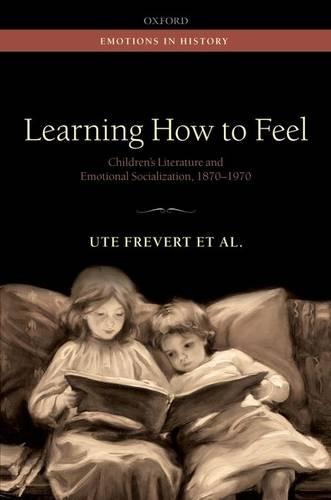
Learning How to Feel :Children's Literature and Emotional Socialization, 1870-1970 - Emotions In History
hardback
Published:
24 July, 2014

Popular Books by Ute Frevert
View All Books by Ute Frevert



Description
More Details
| Type | Book |
|---|---|
| ISBN13 | 9780199684991 |
| ISBN10 | 0199684995 |
| Number Of Pages | 322 |
| Item Weight | 628 g |
| Product Dimensions | 162 x 236 x 26 mm |
| Publisher / Reseller | Oxford University Press |
| Format | hardback |
Media Reviews
this [is] an example of rigorous collaborative work ... It is impossible, in the limited space of this review, to do justice to each article individually ... [this book] sets an enticing research agenda for the burgeoning subfield of the history of emotions. * Thomas Dodman, Journal of Social History *
an admirable approach to writing histories collaboratively, resulting in an unusually tightly focused set of sociological questions and six shared conclusions ... The book thus suggests important questions for future research into the roles of authors, publishers and readers in effecting not just emotional change, but also generationally specific social and political transformations, through the emotional experience of childhood. * Siân Pooley, English Historical Review *
Author's Bio
Ute Frevert is Director at the Max Planck Institute for Human Development and a Scientific Member of the Max Planck Society. From 2003 to 2007 she was professor of German history at Yale University and previously taught History at the Universities of Konstanz, Bielefeld and the Free University in Berlin. Her research interests include the social and cultural history of the modern period, the history of emotions, gender history and political history. Some of her best known work has examined the history of women and gender relations in modern Germany, social and medical politics in the nineteenth century, and the impact of military conscription from 1814 to the present day. Ute Frevert is an honorary professor at the Free University in Berlin and member of several scientific advisory boards. In 1998 she was awarded the prestigious Leibniz Prize.