The Masnavi, Book Three - Oxford World's Classics
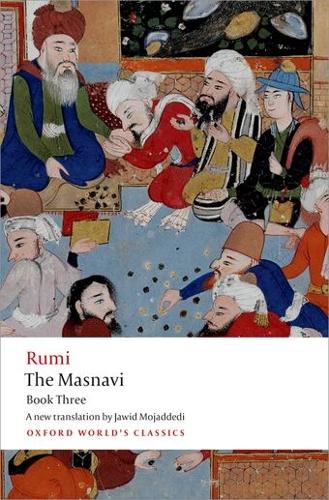
The Masnavi, Book Three - Oxford World's Classics
paperback
Published:
14 November, 2013
paperback
Published:
14 November, 2013

Standard worldwide delivery by
Tue, June 30 - Fri, July 3
Order within
0
Popular Books by Jalal al-Din Rumi
View All Books by Jalal al-Din Rumi
Description
'Your soul each moment struggles hard with death - Think of your faith as though it's your last breath. Your life is like a purse, and night and day Are counters of gold coins you've put away' Rumi is the greatest mystic poet to have written in Persian, and the Masnavi is his masterpiece. Divided into six books and consisting of some 26,000 verses, the poem was designed to convey a message of divine love and unity to the disciples of Rumi's Sufi order, known today as the Whirling Dervishes. Like the earlier books, Book Three interweaves amusing stories with homilies to instruct pupils in mystical knowledge. It has a special focus on epistemology, illustrated with narratives that involve the consumption of food. This is the first ever verse translation of Book Three of the Masnavi. It follows the original by presenting Rumi's most mature mystical teachings in simple and attractive rhyming couplets.
More Details
| Type | Book |
|---|---|
| ISBN13 | 9780199652037 |
| ISBN10 | 0199652031 |
| Number Of Pages | 352 |
| Item Weight | 246 g |
| Product Dimensions | 129 x 196 x 17 mm |
| Publisher / Reseller | Oxford University Press |
| Format | paperback |
See More +
GoodReads Reviews
Author's Bio
Jawid Mojaddedi is Professor of Religion at Rutgers University. Born in Afghanistan, he was a 2014-15 National Endowment for the Arts Literature Translation Fellow and a 2020-21 National Endowment for the Humanities Fellow. Dr Mojaddedi's translation of The Masnavi: Book One (OUP, 2004) was awarded the Lois Roth Prize by the American Institute of Iranian Studies. His previous books include Beyond Dogma: Rumi's Teachings on Friendship with God and Early Sufi Theories (OUP, 2012) and The Biographical Tradition in Sufism (2001).