The Roman Republic :A Very Short Introduction - Very Short Introductions
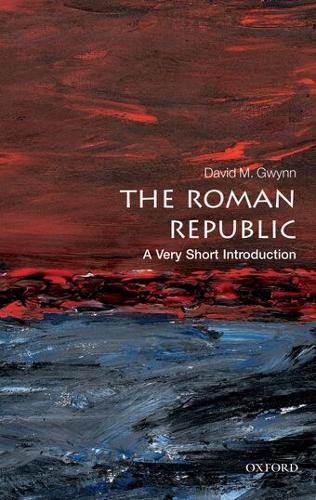
The Roman Republic :A Very Short Introduction - Very Short Introductions
paperback
Published:
30 August, 2012
paperback
Published:
30 August, 2012

Standard worldwide delivery by
Tue, June 30 - Fri, July 3
Order within
0
Popular Books by David M. Gwynn
View All Books by David M. Gwynn
Description
The rise and fall of the Roman Republic occupies a special place in the history of Western civilization. From humble beginnings on the seven hills beside the Tiber, the city of Rome grew to dominate the ancient Mediterranean. Led by her senatorial aristocracy, Republican armies defeated Carthage and the successor kingdoms of Alexander the Great, and brought the surrounding peoples to east and west into the Roman sphere. Yet the triumph of the Republic was also its tragedy. In this Very Short Introduction, David M. Gwynn provides a fascinating introduction to the history of the Roman Republic and its literary and material sources, bringing to life the culture and society of Republican Rome and its ongoing significance within our modern world. ABOUT THE SERIES: The Very Short Introductions series from Oxford University Press contains hundreds of titles in almost every subject area. These pocket-sized books are the perfect way to get ahead in a new subject quickly. Our expert authors combine facts, analysis, perspective, new ideas, and enthusiasm to make interesting and challenging topics highly readable.
More Details
| Type | Book |
|---|---|
| ISBN13 | 9780199595112 |
| ISBN10 | 0199595119 |
| Number Of Pages | 176 |
| Item Weight | 145 g |
| Product Dimensions | 112 x 173 x 9 mm |
| Publisher / Reseller | Oxford University Press |
| Format | paperback |
See More +
GoodReads Reviews
Author's Bio
Dr David Gwynn is Lecturer in Ancient and Late Antique History at Royal Holloway, University of London. He is the author of several books including The Eusebians: The Polemic of Athanasius of Alexandria and the Construction of the "Arian Controversy" (OUP, 2007).