When you buy a used copy YOU SAVE

0.87Kg of CO2

109 litre(s) of Water

0.0065 Tree(s)

1 book donated to global literacy projects
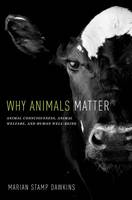
Why Animals Matter :Animal consciousness, animal welfare, and human well-being
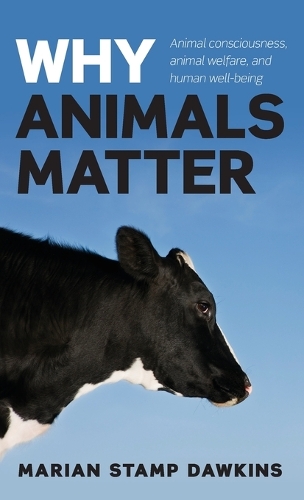
Why Animals Matter :Animal consciousness, animal welfare, and human well-being
hardback
Published:
29 March, 2012
hardback
Published:
29 March, 2012

Standard worldwide delivery by
Tue, June 16 - Fri, June 19
Order within
0

Condition:
USED
$7.37
RRP
$28.19
You save $20.82 (74%)
Available
2
in stock
FREE Returns within 30 days
Popular Books by Marian Stamp Dawkins
View All Books by Marian Stamp Dawkins
Description
In a world increasingly concerned with climate change, food security, and other human issues, the welfare of non-human animals is in danger of being overlooked and side-lined. Using the latest scientific research on animal consciousness and emotions, Marian Stamp Dawkins argues that if animal welfare is to be taken seriously by world opinion, it needs a complete rethink. She asks important questions such as: are we justified in projecting human emotions on to animals? What can science tell us about their quality of life? She concludes that we need to place less emphasis on the conscious experience of suffering in animals, and more emphasis on the practical importance of animal welfare to human health and human well-being. This requires a long, hard look at some of the cherished ideas we hold about animal emotions, and what we can and cannot know about the conscious experiences of other animals.
More Details
| Type | Book |
|---|---|
| ISBN13 | 9780199587827 |
| ISBN10 | 0199587825 |
| Number Of Pages | 218 |
| Item Weight | 378 g |
| Product Dimensions | 141 x 215 x 23 mm |
| Publisher / Reseller | Oxford University Press |
| Format | hardback |
See More +
Media Reviews
This is a sober, responsible way of making the case for animal welfare * Peter Lewis, Daily Mail *
Author's Bio
Marian Stamp Dawkins was born in Hereford, England and has been fascinated by animal behaviour all her life. She read Zoology at the University of Oxford and studied with Niko Tinbergen, the Nobel Laureate and one of the 'founding fathers' of ethology, the study of animal behaviour. In 1998 she became Professor of Animal Behaviour at Oxford. Her research now centred increasingly on large scale commercial studies (broiler chickens, ducks and laying hens) as a bridge between academic research and the wider world of commercial farming.