Ashes, Images, and Memories :The Presence of the War Dead in Fifth-Century Athens
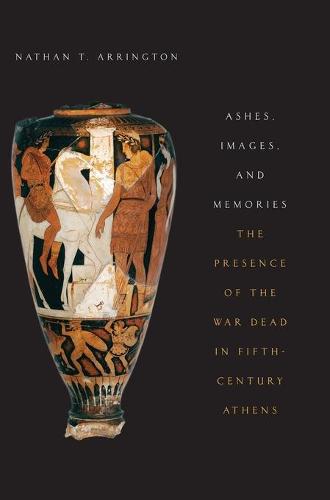
Ashes, Images, and Memories :The Presence of the War Dead in Fifth-Century Athens
hardback
Published:
15 January, 2015

Popular Books by Nathan T. Arrington
View All Books by Nathan T. Arrington
Description
More Details
| Type | Book |
|---|---|
| ISBN13 | 9780199369072 |
| ISBN10 | 0199369070 |
| Number Of Pages | 360 |
| Item Weight | 798 g |
| Product Dimensions | 236 x 165 x 25 mm |
| Publisher / Reseller | Oxford University Press Inc |
| Format | hardback |
Media Reviews
Nathan Arrington's erudite and thoughtful book conjoins a mastery of social history, art history, and field archaeology to explain the role of commemorating war dead in Athenian cultural expression and political development. He offers new and convincing interpretations of the chronology and topography of public rituals honoring the fallen. This has big implications for rethinking the iconography and reception of major monuments and the relationship between war, memory, and democracy. While always sensitive to ancient cultural specificity, Arrington draws telling, and often haunting, parallels between the attempts of democracies ancient and modern to represent to themselves the sacrifice and irreplaceable loss of young men who die fulfilling the purposes of their country. This is a major contribution to the literature on war, art, memory, and ritual. It deserves a wide readership within and beyond ancient studies. * Josiah Ober, Stanford University *
As the centenary of the First World War turns people's attention to the revolution in the culture of commemoration of the war dead effected by that conflict, it is highly appropriate that Nathan Arrington should bring to our attention, as never before, the culture of commemorating the war dead developed in fifth-century Athens. Arrington shows how, by giving the war dead a special status marked by word, deed, and monument, the community from which the dead soldiers had come came to see itself differently. This is not only a challenging example of how to make objects and texts, images and actions, speak to each other, but an eloquent testimony to the extraordinarily pervasive power that the dead can come to exercise over all aspects of a community's life. * Robin Osborne, University of Cambridge *
'Age shall not weary them, nor the years condemn'. Original, meditative, subtle, beautifully crafted, wide-ranging, and brilliantly synthesizing archaeology, art, and text, Arrington's study offers a magisterial new perspective on an enduring human problem. There is nothing as good or as thoughtful on managing the human cost of war as this. * Andrew Stewart, University of California, Berkeley *
This is a scholarly and stimulating investigation of commemoration of the war dead in Classical Athens, which not only provides an excellent (and much-needed) analysis of the current state of knowledge about the Athenian patrios nomos, but also argues for a new way of understanding the relationship between those practices and the wider context of Athenian approaches to the commemoration of death and war. * Polly Low, Sehepunkte. *
Author's Bio
Nathan T. Arrington is an Assistant Professor of Classical Archaeology at Princeton University.